Search This Blog

Showing posts with label CLASSICS. Show all posts

Sunday, May 4, 2025

"RUN AWAY!!!" Celebrating 50 years of MONTY PYTHON AND THE HOLY GRAIL (1975)

I just attended Fathom Events' 50th anniversary screening of MONTY PYTHON AND THE HOLY GRAIL (1975), the film I have seen countless times since discovering it at age ten. I went With dear old friend Matt Snow, whom I met nearly a half century ago, and one of the many things our adolescent sensibilities bonded over was our love of all things Monty Python. Some things you never outgrow.

Me representing as Tim the Enchanter, and Matt, wielding the Holy Hand Grenade of Antioch.

If I had to guesstimate, it was an audience of perhaps thirty people, many of whom were under-16s who had been brought by parents.I wonder how they processed the film, and Python in general, because Python's bizarre style has been well-absorbed into the global language of comedy over the past 55 years, so does their flavor have the same kind of seismic impact on today's youth as it did on my generation? I kinda doubt it, and it saddens me to think that works such as this may now reside in the "you had to be there" category. Nonetheless, MONTY PYTHON AND THE HOLY GRAIL remains my personal pick as the funniest film ever made. Definitely not for all tastes, but its utter absurdity has always resonated with me.

Representing with a female Sir Bedevere cosplayer, Note her bag: a duck. If you know the movie, you get it.


Monday, October 7, 2024

31 DAYS OF HORROR 2024 - Day 7 : KING KONG (1933)


What more can possibly be said of the original KING KONG? It's the grand-daddy of all giant monster movies and a landmark in both American cinema and general Americana, a work whose impact still reverberates nearly a century after its release. Everyone knows its plot particular, but it can be broken down thusly: A film crew makes an expedition to an uncharted island in the South Seas, where they find a gigantic ape that is worshiped as a god by the natives, and the director intends to shoot a movie about the beast. The woman who is along as the star of the  film is abducted by the natives as a sacrifice to the ape, who carries her away through a jungle filled with deadly prehistoric animals to his mountain top lair, and the film crew and ship's compliment give pursuit, many losing their lives in the process. When the woman is rescued and brought back, the ape follows and is brought down by the film crew's gas bombs. Ferried back to New York City, the beast is put on display as an attraction for the city's affluent, but the creature escapes and goes on a deadly rampage until it finds the woman again and carries her to the highest point in the city. It is there that the monster meets its fate.

That description is basically what happens, but it in no way communicates the richness of the film's black-and-white visuals, its then groundbreaking stop-motion visual effects, its surprising level of adventure, action and violence, Kong being something of a sympathetic terror — after all, it was the white men who invaded his domain and kidnapped him with an end goal of what amounts to enslavement — and enough subtext to fuel decades of interpretation of the narrative's "true" intent. KING KONG is a work that was way ahead of its time in every way, while still being very much a product of its era in terms of now "problematic" content regarding race and handling of its female character, so newcomers are advised to approach it with what was acceptable back in 1933 firmly in mind.

AS previously documented, I was a monster kid from Day One, but I never saw the original KING KONG until I was eight years old, five years after being exposed to the character of Kong via Saturday morning reruns of the 1966 Japanese animated Rankin-Bass cartoon show in which Kong was a hero who is befriended by a young boy, and also the 1967 Toho film, KING KONG ESCAPES, which brought Kong into the landscape of Japanese kaiju. I loved both, but I did not experience the real deal until it was released in a restored version in 1973. My mother knew and understood my love of monsters, so when she heard of the grand-daddy of them all coming back to the screen, she took me as a treat. My mind was blown, and though I was raised in a socially-conscious Black household, I was still too young to parse the movie as anything other than a riveting adventure movie that happened to feature a rampaging 30-foot gorilla. The "problematic" elements did not register at all, such was the power of the story being told.

Following that inaugural screening, I saw KING KONG on a yearly basis, as it became a perennial constant on WOR, Channel 9 out of Secaucus, New Jersey. During the pre-cable years, it aired every year on Thanksgiving as part of a two-day package of giant ape and monster movies intended to give the kiddies something to do when the holiday feasting was over and the adults watched football in another room and/or got their drink on. That day was sometimes looked forward to more than the family gathering with all of the slaved-over banquet, because we got KING KONG, SON OF KONG, and MIGHTY JOE YOUNG on the first day (though some years began the festival with MIGHTY JOE YOUNG), followed by three random Godzilla movies (usually a trio of the lesser ones) on the following day. 

Vintage TV GUIDE ads for the annual Channel 9 festival of giant monster mayhem.
 
So it was that every year Tri-State Area kids were refreshed on the legend and tragedy of King Kong, and his story has stuck in our hearts and minds ever since. Unquestionably the most culturally important giant monster movie ever made, and without it its success we would never have gotten the legion of city-wrecking titans that followed in his wake, most significantly Godzilla. 

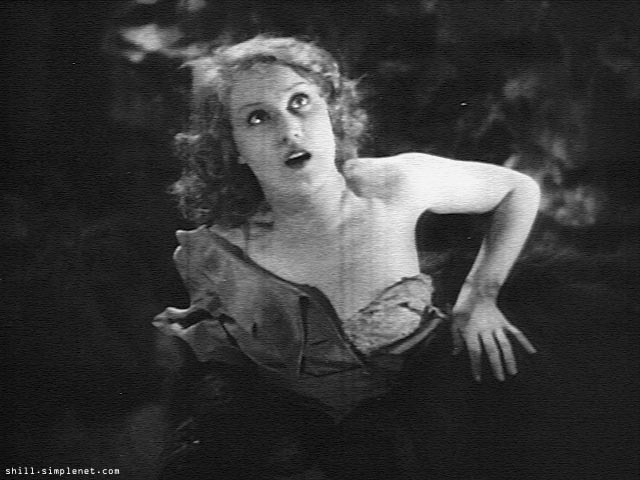
In 2004, when word of Fay Wray, leading lady in the classic 1933 version of KING KONG, screamer extraordinaire and the cinema’s quintessential damsel in distress, passing away at age 96 hit, film fans worldwide were devastated. The black and white image of her stunning blonde beauty, adorned in naught but a torn teddy while struggling to escape the fearsome-yet-adoring clutches of the thirty-foot monster god of an uncharted island had at that point been carved in stone as a cinematic landmark for seventy-one years and is unforgettable proof of the dream machine that was once the Golden Age of Hollywood.

Upon hearing of Miss Wray’s passing the first thing that crossed my mind was “Was she the last person involved in KING KONG to go?” If she was, she may have been the last of a dying breed, the old-school Hollywood movie star. When one thinks of those who pass for stars these days, that’s a sad thought indeed. Will Keanu Reeves, Brittany Murphy or even Adam Sandler be remembered down the line with the fondness afforded Wray and her contemporaries? I sincerely doubt it, and that’s ironic since Wray publicly bemoaned the fact that the mythic status of her role in KING KONG lead to the overshadowing of every other part she essayed.

With the unabashed love that I have for giant monster films, it should come as no surprise to anyone that the 1933 KING KONG is my favorite movie. I say movie because film is a somewhat lofty term often applied to works by artists such as Bergman, Kurosawa and Jarmusch, items of deep examination of the human condition and such. Not so with KONG. KING KONG is a rollicking piece of entertainment, sheer fun from start to finish, with nothing on its mind except entertaining its audience and placing the viewer firmly within an adventure into the fantastic. Fun and entertainment is what it’s all about, and by those criteria KING KONG is a great movie.

A Depression-era adventure yarn like no other, KING KONG has mood, romance, thrills and balls-out monster action from start to finish and several sequences that have since become ingrained into the worldwide popular culture. And considering that Kong himself has existed on his island for thousands of years, I have always wondered what his typical day was like. During the harrowing adventure shared by Anne Darrow and Jack Driscoll deep within the teeming jungle of Skull Island, we see Kong handing out ass-whuppings on his fellow jungle denizens like it was Halloween candy. Remove the two hapless humans from that picture and you have to realize that Kong’s day-to-day existence would have sucked most egregiously when he wasn’t being offered native women with which to do God only knows what. I can see it now: the big guy is lumbering down a dense forest path when, suddenly, some primordial crawly thing drops out of a tree and attempts to eat his face. Kong savagely dispatches this creature and continues on his mighty way. Then, without warning, a Tyrannosaurus Rex jumps out of a ditch and tries to bite his nuts off. Our giant-ape-about-town puts much foot to scaly ass and vanquishes the errant T-Rex by ripping off its head and taking a big dump down its throat. After foraging for whatever may constitute the diet of a thirty-foot primate, Kong returns to his mountain top lair to chill out and relax. As he reclines and begins to nod off to Slumberland, a giant carrion bird swoops from the skies and tries to lodge its beak up Kong’s hairy ass. Kong clenches his titanic butt-cheek muscles, breaking the bird’s neck like a Mister Salty pretzel stick. Kong then stands atop the corpse, throws back his head and drums on his chest. He lets out a cry of what may appear to be triumph, but he’s more likely saying “Can’t I go through just one day without somebody trying to eat my ass??? FUCK MY LIFE!!!”

In honor of Fay Wray’s passing, I watched the film again that night, and it was sort of like attending the wake of someone I’d known since childhood. I just wish that I could have invited everyone I know over to share it with me.

In short, the 1933 KING KONG is quintessential seminal giant monster cinema and should be experienced by every true lover of movies, and especially of monster movies in particular. A landmark of 20th Century Americana in no uncertain terms.

Friday, January 19, 2024

IMITATION OF LIFE (1959) AT THE FILM FORUM

From 2015 on THE VAULT OF BUNCHENESS.

Lobby card from the film's original release, featuring Susan Kohner as the troubled Sarah Jane Johnson.

Just got back from the Film Forum's screening of IMITATION OF LIFE (1959), a film that has fascinated me since I first encountered it in the great Esther Newton's infamous "American Society On Film" class during my SUNY at Purchase college days. It's a re-imagining of a 1934 chick flick/"weepie" about two mothers, one black and one white, and their daughters, who all come together under one roof as a blended family and contend with issues of class, race, and family dysfunction, and the 1959 version is one of the all-time classic examples of a textbook emotionally-manipulative Hollywood soaper. Its examination of how American society of its era made true equality/harmony between blacks and whites in general unlikely at best and hauls out the longstanding tropes of the martyred, saintly older black woman who's the emotional backbone and real strength of the family (to both black and white factions), and the so-called tragic mulatto whose case of self-loathing is invariably more compelling than the upper-class travails of the white protagonists.


Sarah Jane (Susan Kohner), surrounded by white masks. Subtle it is not...

I won't spoil the plot's details but the 1959 IMITATION OF LIFE's portrait of Sarah Jane (Susan Kohner), the angry, self-loathing light-skinned daughter of a black father who's described as "almost white," is far more compelling than the rote rags-to-riches showbiz rise of its white main character (Lana Turner) and how her success leads her to unintentionally neglect her blossoming 16-year-old (Sandra Dee). The actress's storyline is not bad by any means, but it was something that was already seen numerous times prior to the film's release, however it's essential to the overall narrative by providing the perfect background against which to contrast the entwined lives of Sarah Jane and her mother (Juanita Moore) who works as the actress's live-in maid and bosom companion whose support and caring for the actress's daughter frees the actress to pursue stage gigs. Sarah Jane's rejection of her dusky heritage and her shattering desire to pass for white from an early age form the true emotional core of the story and Susan Kohner's Oscar-nominated performance renders the character's arc as nothing less than painful and heartbreaking. In short, if you have not seen this film, seek it out for Kohner's arc.


Which brings me to last night's Screening at the Film Forum, where I met the one and only Susan Kohner. Kohner's spectacular portrayal of the deeply troubled, self-loathing Sarah Jane Johnson struck a very strong chord with my mother's side of the family, especially with a certain aunt who basically was the character in real life. (Though Sarah Jane never ran into the same kinds of issues with the law that the aunt in question did, but the less said of that the better...) Following the film, Kohner sat for an interview with a film professor  — whose questions/expoundings were of little or no weight and who clearly missed the entire point of the movie he was allegedly such an authority upon; that assessment was shared by a friend of mine who was also in attendance and is a highly-knowledgeable film scholar and director of films herself — and later answered questions from members of the audience. Since the opportunity was afforded, I took the mic and told Kohner of how much her character and performance meant to my family and especially my aunt. Following that, she was also kind enough to pose for a shot with her that I will send to the interested parties in my family, especially the aforementioned aunt.

 Yer Bunche, with the one and only Susan Kohner.

Thursday, April 21, 2022

THE PACHYDERM AND THE PITY: on DUMBO (1941)

I'm not crying...YOU'RE crying!!!

So...
 
I watched DUMBO (1941) again the other night, the first time I'd sat through its entirety in close to 20 years, and while I consider it to be among the strongest of Disney's early features, I doubt that I will be able to sit through it again any time soon, and if I do I definitely will not enjoy much of the experience. You see, I have adored elephants my entire life and if a nature documentary is on, I will stop whatever I am doing to observe the footage and any new information that may be imparted. Meaning that I get elephants for who and what they are, so witnessing the outright cruelties inflicted on wee Dumbo from virtually the moment the stork drops him off is an agonizing ride. 
 
Dumbo (and let us not forget that his actual name is "Jumbo Jr.") is relentlessly abused and bullied by all and sundry, with the sole exceptions of his mother and Timothy the mouse, and he's just a defenseless baby. When his mother justifiably rampages against a kid who's abusing her child, she is attacked and whipped by the circus's ringmaster and assorted roustabouts as they subdue her, and she ends up in chains, separated from Dumbo while he is forced into the humiliating and dangerous role of a clown, and the viewer's heart breaks. Then the "Baby Mine" number comes on, where Dumbo visits his mother during her imprisonment and the shackles prevent his mother from coming close to the window to actually see him, so all the she can do is extend her trunk through the bars of her prison to caress the wee, weeping baby while singing him a lullaby. For me, it's the Disney moment that wields the most emotional power. A real haymaker that just comes in and mercilessly shatters what remains of your broken heart into about a million shards. I wept for all I was worth while watching it. Utterly wrecked me.
 
And do NOT get me started on the murder of crows who befriend Dumbo and Timothy and sing the now-infamous "When I See An Elephant Fly." I wish Richard Pryor or Paul Mooney had commented upon that sequence. Watching it this time, I was shocked by its sudden intrusion of outright minstrel show antics in a tone completely at odds with the rest of the film. I have no illusions about such material in old Hollywood productions, but as seen here it was just odd, and it mars an otherwise excellent (if painfully miserable) classic. (Same goes for "What Made the Red Man Red" in PETER PAN, and that was arguably a better song.)

Poster for the original theatrical release.

Sunday, April 17, 2022

YET ANOTHER OBSERVATION ON THE TEN COMMANDMENTS (1956)

Man, slave girl Lilia (Debra Paget) goes through some shit in THE TEN COMMANDMENTS (1956).

First she gets conscripted as a sex slave/flagellation victim by Egyptian master builder Baka, then when he's killed by Moses she ends up as the property/sex slave of scumbag Dathan (Edward G. Robinson) for several years, and finally, once the Jews make their way out of Egypt and she is reunited with her true love, Joshua the stone cutter (John Derek), she is ordered by Dathan to be tied down on the altar of the golden calf as a human sacrifice the minute Moses fucks off up the mountain to receive the titular laws from Gawd and the Jews suddenly throw a wild party/orgy that apparently includes every form of wickedness and perversion known to man. She gets saved from that sorry fate at the last possible second, but the poor girl simply could not catch a break during the movie's 3 hour and 40 minute running time.

ANOTHER OBSERVATION ON THE TEN COMMANDMENTS (1956)

This time around with THE TEN COMMANDMENTS (1956) finds me paying closer attention to certain plot details. For example: In the scene where the vile Dathan (Edward G. Robinson) has acquired the slave girl Lilia (Debra Paget) as part of a massive and lucrative "thank you" package from soon-to-be pharaoh Rameses (Yul Brynner), and he has her dressed in sexy finery by his house slaves. He orders a purple flower removed from her hair and replaces it with a "more appropriate" white one, a clear symbol letting us know that she is a virgin. Now she is not only very much unwillingly Dathan's property to do with as he pleases, but her compliance to his sexual whims will prevent Joshua the stone cutter (John Derek), from being sent to an horrific life in the copper mines (a promise that is never kept, unbeknownst to her), so she utterly surrenders her dignity and weeps while swearing to Dathan that she will do anything to save her love's life. 

It was always obvious to me what Lilia was being leveraged into, but this was the first time I noted the flower as a virginity signifier. Makes the scene that much more tragic, once one grasps that rather obvious symbol that I somehow missed for over forty years.


AN OBSERVATION ON THE TEN COMMANDMENTS (1956)


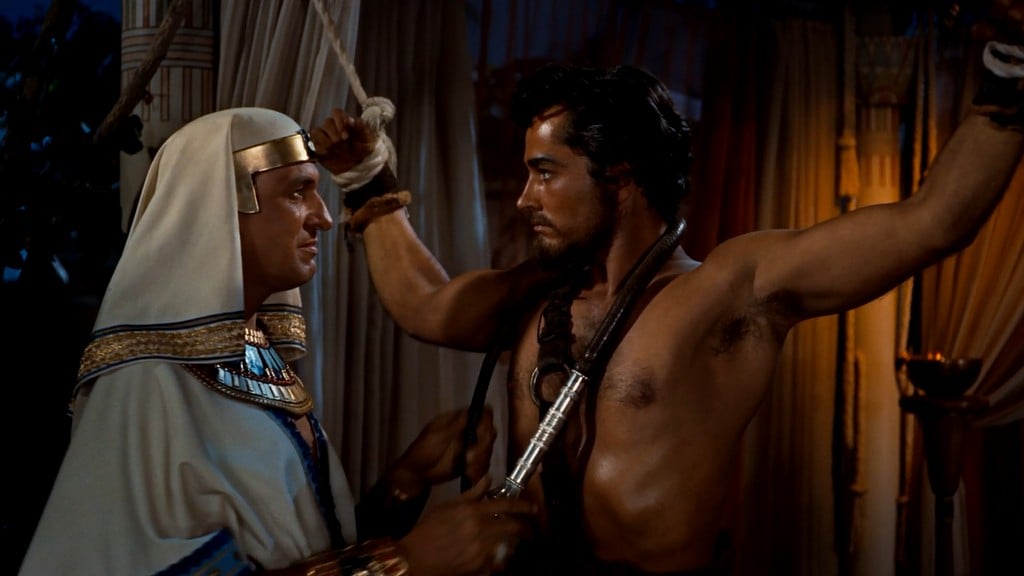
Watching THE TEN COMMANDMENTS from an adult perspective — and a dirty-minded one at that — is a totally different experience than it was when I was a kid. Seeing this sequence again right now, I only just noted that Baka (Vincent Price) had those tethers at the ready in his lounging area when about to whip Joshua the stone cutter (John Derek) to death. Baka was clearly a slimy motherfucker, as evidenced by his conscripting slave girl Lilia (Debra Paget) into unwilling sexual slavery and his statement that he would only keep her "for a little while," then return her to her life of everyday slavery "a bit more worthy." If he had those tethers ready, what the hell kind of scene was he into, and how many previous slave girls (and boys; he seemed like he would be rather fluid) must he have whipped into oblivion?

Saturday, April 2, 2022

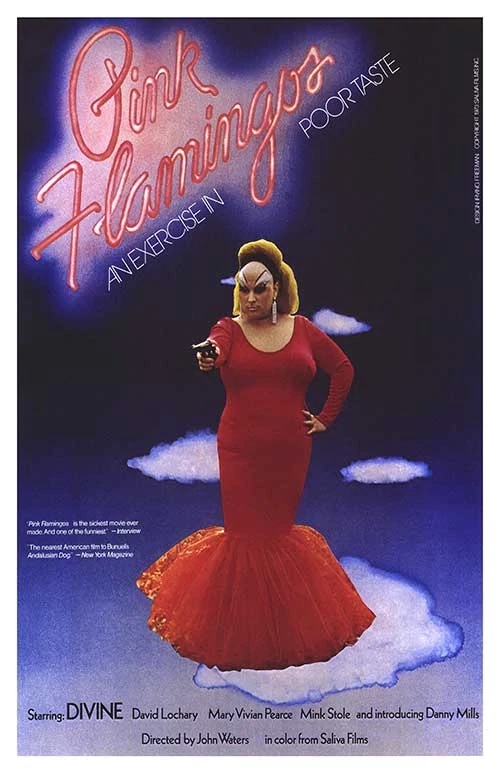
HAPPY 50th ANNIVERSARY TO PINK FLAMINGOS (1972)

No lie, one of the movies that changed my life.
 
Today marks the fiftieth anniversary of the general release of PINK FLAMINGOS, the third feature by legendary groundbraking writer/director John Waters, and I shared it at a screening at my friend Lexi's place. Including myself, there were eight attendees, three of whom had not seen the film. I was somewhat disappointed to see the reaction of the newbs, which was far more reserved than I would have thought. Too bad they did not see it before years of being able to watch any kind of filth imaginable from the privacy of a laptop. Anyway, when I asked "Well?" at the end, Charlie, the hostess's little brother, simply said "Of all the films I have seen, this one of them."

Consuming a chocolate Ho-Ho, in honor of the film's legendary ending.
 

The classic ending.

Friday, March 4, 2022

100 YEARS OF NOSFERATU (1922)


Thursday, June 11, 2020

THE BELLES OF ST. TRINIAN'S (1954)

NOTE: This piece originally ran on THE VAULT OF BUNCHENESS back in June of 2009.

Way back in the days when British humor was very much a “safe” and staid animal, a series of cartoon illustrations by renowned cartoonist Ronald Searle launched a minor dynasty of anarchic humor. Searle’s original concept was a skewering of the British private school system, focusing on the fictional St. Trinian’s school for girls, and his sense of then-transgressive humor was very much akin to our own homegrown Charles Addams, or even the yet-to-come National Lampoon. St. Trinian’s itself was a haven for budding sociopaths and children of highly questionable breeding, and a training ground for all the things young British girls were never supposed to get up to — especially not during the post-WWII, pre-rock’n’roll Britain — such as drunkenness, gambling, torture (with medieval implements), arson, mucking about with automatic weapons, smoking (of tobacco and, well, you know), witchcraft/Satanism (which comes as little surprise since Satan himself was depicted arriving for parents’ day), profanity, sports hooliganism, flagrant promiscuity, and outright murder (of innocents, each other, the school’s rivals, and even their teachers). This was quite radical stuff for pre-punk England and was apparently very shocking during its day, but it struck a chord and become something of an institution, so much so that Searle sought to distance himself from his creation by penning the following statement in 1953:

ANNOUNCEMENT

ST. TRINIAN’S is gone. Encouraged by the success of recent atomic explosions in the Pacific, the school Nuclear Fission experts threw themselves into their experiments with renewed enthusiasm and with the help (thanks to certain old girls) of some newly acquired top secret information, achieved their objective at midnight last night. The remains of the school are still smouldering. By some miracle the statue of our patron saint, scorched but uncracked, still stands where once the ripple of girlish laughter could be heard on a clear frosty morning. The fate of the teaching staff is unknown, nay, will never be known, and a few young ladies are believed to have survived. Early morning reports from various parts of the country bring news of blackened figures trotting through sleeping villages, but bloodhounds have failed to pick up a scent — however radioactive. This blow from which St. Trinian’s cannot recover (the building fund has been embezzled anyway) may bring a sigh of relief to many a parent and a quiet tear from true lovers of healthy girlhood. Let it suffice for us to say (before we draw a veil over the last broken limb) we are proud that the name of St. Trinian’s has echoed through this land.  R.S.

But, much like Ian Fleming’s completely and utterly failed attempt at killing off James Bond in the novel of FROM RUSSIA WITH LOVE (1957), the miscreants of St. Trinian’s have proven unkillable and spawned a series of movies that continues to the present day all stemming from 1954’s THE BELLES OF ST. TRINIAN’S.

Widely hailed as one of the all-time classics of British comedy, the first entry in the series introduces us to the school and its girls, a largely faceless group who serve as a wild white rabble not too far removed from what one would imagine the most savage of headhunting tribes might be like had they been transplanted to the English countryside and played for laughs. When first we see them, the girls are returning from school break and as they return the locals board up their windows and flee, all of which is apparently par for the course when living so close to the posh dumping ground of estrogenic delinquents. Even the local police dread the girls, and the board of education turns a blind eye to the school’s flouting of the law and general decency following the disappearance of two of its inspectors (who, unbeknownst to the board, have taken up residence at St. Trinian’s in order enjoy the attentions of its horny teachers and older students).

The story proper is rather slight, intending to amuse the audience more with the overall symbol of the school's very existence being a "fuck you" to British propriety than giving the girls much by way of true character, so the focus is mostly on the school's headmistress, one Miss Fritton, played in drag by Alistair Sim, one of the most beloved of the old school English thesps.

Not Bea Arthur: Alistair Sim as Miss Fritton.

Miss Fritton is considerably more sweet and traditional than her charges, so she's at a bit of a loss when faced with the school going under due to lack of funds (she accepts checks for student tuition that are post-dated as far in advance as four years), but salvation rears its head when her sleazy brother, Clarence (also played by Sim), arrives and announces that the daughter of an Arab sultan has come on board as a new student. The princess' father owns a can't-miss race horse named Arab Boy that Clarence seeks info on in order to further his own illegal betting endeavours (he wants the horse to lose), so he blackmails his sister into re-admitting his expelled daughter to St. Trinian's so she can be his intelligence gatherer.

From there it's the loosest of plots involving Miss Fritton betting what remains of the school's cash on Arab Boy to win the money that will save the school's ass, and the war between the older girls who are working on Clarence's behalf and the younger girls who are on the side of Miss Fritton and the school. That totally predictable plot's pretty much there to serve as something resembling a narrative so as to appease the more persnickety members of the audience while the rest of the film allows viewers a very amusing look into the everyday goings on at St. Trinian's, shenanigans that are kind of like ANIMAL HOUSE only with the anarchic fraternity brothers being a pack pre-collegiate females.  We get to know the avaricious, dissatisfied, drunken (and in one case hiding out from the law) teaching staff and also witness the doings of the younger girls, a violent if industrious lot who brew commercial quantities of gin in the school's science lab for sale by the hilariously sleazy and shady cockney quasi-crook Flash Harry (George Cole). There's a chaotic Parents' Day thrown in that corresponds with the return of a small army of the school's "old girls" (previous graduates), as well as a devastating field hockey match, and it's all quite amusing, but to today's viewer it will most likely be seen as a case of the film's reputation as being its own worst enemy. It's good, but I really think this is one of those you either had to be there for in the first place, or else have grown up with it. By the standards of the average American viewer this is pretty tame when stacked up against U.S. comedies from the same period.

The thing that strikes me most about THE BELLES OF ST. TRINIAN'S and its iconic status is how staid it is for something once considered shocking. I'm sure that's a matter of what one culture would find transgressive while another would not necessarily, and much of the film's humor reminded me of such 1960's American sitcoms as BEWITCHED and THE ADDAMS FAMILY. In fact, St. Trinian's would have been the ideal school for Wednesday Addams to attend, and there's even a teacher who's a dead ringer for Carolyn Jones as Morticia Addams. Anyway, it's fun and definitely worth checking out, but don't expect anything that'll really knock you out. And in case you're wondering why I bothered with THE BELLES OF ST. TRINIAN'S in the first place, I wanted wanted to see the movie that served as the template for the 2007 remake, a film I saw the latter half of on cable during my recent visit to England. I finally got around to watching the remake last night, so expect a look at that flick sometime soon.

Wednesday, June 24, 2015

JAWS AT 40

There are some movies that are sheer perfection when seen properly projected, and JAWS is one of them. Arguably the first true summer blockbuster, as we have come to understand the form, the film has been re-released for limited screenings during this, its fortieth anniversary, so I hauled myself to the temple of the flickering image to take in an all-too-rare revival of a horror masterpiece.

Seeing it on the big screen (at the Union Square multiplex in Manhattan) for the first time in 40 years transported me right back to being a few days shy of turning 10 and my embracing of it as my favorite movie for a couple of years. In my early years I had my career goal set on being a marine biologist with a concentration on shark studies and I dragged my parents to every shark-related activity that I could gain access to, so seeing JAWS was an inevitability. Though rated PG, the film's poster featured the ominous tacked-on caveat, "MAY BE TOO INTENSE FOR YOUNGER CHILDREN," which only guaranteed the attendance of this budding gorehound, so considering that and the fact that it all boiled down to a story about a huge goddamned shark merrily munching its way through summer season beachgoers (and a hapless dog), you had a recipe for perfect entertainment. (And as long as we're keeping it real, whatever would transpire onscreen couldn't be any more intense or emotionally scarring than the daily witnessing of my parents' marriage rocketing down the bowl.) And when I finally did see JAWS, I fucking loved it. It was a perfect "man versus force of nature" yarn, sort of an ancient seaman's legend writ for the late-20th century, and it's that primal simplicity of the narrative, coupled with some stunning sequences of suspense and stellar characterization, that so resonates. 

It was great to see JAWS again with an audience and when the lights went down, it was like settling in as a skilled elder storyteller wove a yarn to scare and enthrall kids while also instilling in them the string and basic lesson of taking what lurks in the depths seriously. There were some audience members who were clearly veterans from the first go-round but the majority of attendees were thirty or younger, most of whom had seen the movie numerous times on cable or DVD, and the few who who had never seen it before were easy to spot, thanks to their sudden vocalizations of shock in all the places that scared the motherfucking shit out of us back in the summer of 1975.

The horror from the deep revealed.

For the record, my favorite moment is still the part where Brody chums the water and meets the shark — sea monster, really — face-to-face, after which he backs into the Orca's interior, his face a frozen, stunned mask of horror as he matter-of-factly states, "You're going to need a bigger boat..." Also of note, you could have heard an amoeba fart during Quint's chilling recounting of his experience following the sinking of the USS Indianapolis, so all-consuming was the silence in the auditorium. The moment when Quint describes reaching over to wake up his friend, only to have the man tip over to reveal that he had been devoured from below the waist by one of perhaps a thousand tiger sharks... *SHUDDER*

Quint (Robert Shaw) makes with one of the most riveting and horrifying speeches in the annals of cinema.

Seriously, if it's playing anywhere near you, hie your ass to the theater and pay your respects as a true cinephile by seeing JAWS again as it was intended. I'll never watch it again unless it's projected and you can bet your ass I'll be there for the 50th anniversary.

Saturday, December 28, 2013

MIRANDA (1948)

The one and only Glynis Johns as Miranda, a lonely mermaid who's out to catch herself a man.

Ever since I was a little boy I have loved and been fascinated by the lore of the mermaid, an interest likely sparked by the adorable Neptina, the tastefully topless half-fish girlfriend of early anime hero Marine Boy. I was one of the rare little boys who never found girls to be "icky," so I was fascinated by the female from Day One, plus I had a deep interest in aquatic lifeforms that led my earliest job aspirations to lean toward marine biology, so the concept of a magical creature that combined my two loves into one was bound to appeal. From the early days of watching Marine Boy and Neptina "fighting evil 'neath the sea," I moved on to reading world mythology and absorbing the many cultural variations on the mermaid, and as I got older I sought out any movies that had to do with them, nearly all of which revolved around mermaids falling in love with men from the surface world. The list of the genuinely good films in this niche category is rather small and until now I held the Daryl Hannah vehicle SPLASH! (1983) as the exemplar of the form, but now that I've seen Britain's 1948 cult classic MIRANDA (based on a stage play by Peter Blackmore), Madison's reign is over and her Cornish predecessor has taken her place in my heart and mind.

Dr. Paul Martin (Griffith Jones) fails to entice his wife, Clare (Googie Withers), into joining him for a fishing trip to Cornwall, so he leaves by himself for a bachelor's holiday. While out angling in a boat, Paul's line is snared by what he presumes to be a very large fish and he is pulled overboard, where he is promptly seized and spirited away to the underwater cave of Miranda Trewella (Glynis Johns), a lonely mermaid who's looking for a man — she'd previously caught other men but threw them back because they were too short — and instantly takes a liking to the married doctor. She makes it very clear that she intends to keep the doctor forever and he is absolutely not immune to her considerable charms while stuck in her hideout (despite his love of his wife, which he immediately tells Miranda about), so, understanding Paul's fidelity (which is fighting a losing battle against her otherworldly allure), Miranda agrees to set him free, provided he takes her back to London with him for a three-week stay. She wants to see and experience all of the things she's read about in books and magazines found mostly on ships, and she would be willing to pretend to be an invalid during her stay, covering her fish tail with long dresses and blankets while riding around in a wheelchair or being carried. Paul agrees to her request and brings the beautiful creature to the London flat that he shares with his wife and their live-in servants, butler/chauffeur Charles (David Tomlinson) and maid Betty (Yvonne Owen), with Miranda playing the role of a patient who needs Paul's care over a specifically-stated period of three weeks. 

During the course of her stay, every male that she meets is completely enthralled with Miranda and not one of them stands a chance against her spell (though Paul puts up the most resistance). She bewitches Charles — who's engaged to Betty — and Nigel (John McCallum), an artist who's betrothed to Clare's best friend, snobbish hat designer Isobel (Sonia Holm), and enters into affairs with both, which of course results in all sorts of romantic mishegoss that postwar British society found scandalous and wholly inappropriate. Yet as all of this extracurricular spit-swapping occurs with the two mesmerized young men — and, to a certain extent, Paul as well — Miranda remains as sweet as honey and it's impossible to hate her for what appears to be simple (albeit powerful) sex appeal, and not even the women whose men she's stealing really hold it against her (their ire is instead directed at their helpless paramours). Especially not Clare, who eventually twigs to Miranda's secret, realizes there's some form of magic involved in all of the seduction going on, and settles back with an amused eye to watch what she knows will be an inevitable emotional train wreck (or as much of an emotional train wreck as the British stiff upper lip of 1948 would allow). It all amounts to a (mostly) one-set sex farce that leads to a rather surprising ending, especially for a film of its vintage and country of origin.

MIRANDA is a delight from start to finish and it wastes absolutely no time in getting the ball rolling, with Miranda coming into the narrative about two minutes after the opening credits. Highlights include:
  • The eerie-but-charming siren song that Miranda sings at night, a strange melody heard by the entire household.
  • The depiction of Clare and her performance by Googie Withers. It would have been easy to portray Clare as a shrewish wife who sought to tear down the invalid Miranda for her obvious effect on Paul, but Clare is both very smart and realistic, gradually realizing there's more going on than her husband's head, and the heads of the other men, being turned by a pretty wheelchair-bound girl. A refreshing change from what's expected in this kind of scenario.
  • Miranda's adventures around London while chauffeured by the increasingly-smitten Charles, especially her argument with a sea lion after she orally catches and swallows a fish meant for it during feeding time, an argument loudly conducted in fluent sea lion, no less.
  • Miranda's prodigious appetite and consumption of raw seafood.
  • Miranda revealing in a throwaway line that she is the bastard daughter of her mermaid mother and a Covent Garden chorus boy named Matthew Trewella.
  • British cinema legend Margaret Rutherford as Nurse Carey, the health care professional whom Paul brings in to attend to Miranda's "special needs" who is ideally suited to the case, thanks to her "eccentric" nature. She believes in mythical creatures, so her reaction to the reveal of Miranda being a living, breathing mermaid is one of utter delight, so it is never in doubt that she will keep Miranda's secret.
  • The early pairing of Glynis Johns and David Tomlinson, some sixteen years before they were cast as Mr. and Mrs. Banks in the Disney classic MARY POPPINS. Witnessing a still-gentlemanly Tomlinson overcome with lust for the lovely mermaid and losing his battle with himself is very funny.
  • The running gag involving Miranda treating the Martin's well-populated fishbowl as a candy dish. At the beginning of the film there are around ten fish in the bowl. By the end...not so much.
  • As her time on land grows short, Miranda gifts her three men with neck-worn tokens containing locks of her hair, in celebration and remembrance of "a love that might have been."
  • The scandalous notion that Miranda, while owning other undergarments, does not own a single pair of panties, much to the shock of Clare and her maid.
  • "Sea Cow?!!? SHE KNOWS!!! If you think you're going to take a peek at my tail, you're very much mistaken!"
  • Miranda's tail, which looks exceptionally realistic when its seen flopping about in water. The tail is even afforded an onscreen credit for its maker, namely Dunlop.
  • The black and white photography lends the story a dreamlike aesthetic that greatly benefits the proceedings.
One of the things that most fascinates me about this film is that when looked at from the point of view of a rather jaded audience member some 65 years after its release, it's fun to ponder just how risque this movie must have been when it hit the U.K.'s screens during its original release. For one thing, you get a mermaid who's topless when she's seen in the water (though her hair is always strategically placed), and piled on top of that there are several references to fish (and their smell) and wetness that bear intentionally vulgar connotations, and Miranda's sweet-faced, very matter-of-fact sexual aggressiveness, which brings me to the film's ending.

WARNING!!! HERE THERE BE SPOILERS!!!

Far from being merely the male sex fantasy adventures of a beautiful horny mermaid on the loose, Miranda's sexual campaign is revealed near the end of the film to be her acting not only on her personal loneliness, but also taking action to ensure the survival of her species. She earlier states that her mother had an affair with a human man, and she also mentions that mermen do exist but their unattractive looks make them unappealing to her — and presumably other females of her species — so she's opted to mate outside of the more obvious choice, and her dalliances with the three men under her thrall are an effort to widen the genetic options. It's never explicitly stated as such, but that's exactly what's going on. And while the goal of conceiving a child out of wedlock via three different men was probably scandalous enough for its era, an aspect that absolutely would never have flown in an American film, it's the film's very last shot that really raises eyebrows. When Miranda escapes back to the sea after Clare subtly calls her out for being a mermaid — and there is no malice about that; Clare is fascinated, but she wants to make the discovery public, which Miranda (and Paul) is not at all thrilled about — we see Miranda swim away, after which there is a flash-forward that shows a very happy Miranda on the shores of Majorca with a mer-baby on her lap. So in a film made by one of the most propriety-obsessed European societies during the postwar/pre-Profumo era, we get a feel-good story about a hot chick who gets knocked up by one of three possible babydaddies and we're happy to see the unashamed result.


How in hell did they get away with that in a 1948 British comedy, and did it ever get an American release? (I'm guessing that it was okay by virtue of Miranda not being a human woman, but even so it's still a bit of a shocker for its time.)

The movie is dominated by the performance of Glynis Johns as Miranda, and I defy you to find any straight guy who wouldn't willingly end up a slave to the character. She's beautiful, dryly funny, has eyes that draw one in like quicksand, has charm to spare, and she's horny as hell in a classy British way. And while Miranda is a natural-born seducer — which may be magically assisted, though it's never explicitly spelled out — and knows full well that's she's messing with men who are all involved in very committed relationships, she doesn't have a malicious bone in her body, so her man-stealing ways are impossible to hate, especially once we get that she's doing what she's doing by way of acting on a biological imperative. In short, she's an ideal fantasy creation who carries equal irresistible appeal for both adults and kids. This movie can be run for kids and not be considered salacious because when viewed through innocent eyes, Miranda's romantic entanglements can be seen as simply kissing and such, the kind of thing that mermaids get up to in even G-rated kiddie flicks, and the scene fades out during the three instances when it's obvious to adult audience members that the Beast with Two Backs is about to be made. (Don't ask me exactly what the logistics of achieving successful intercourse between a human male and a mermaid may be in this specific instance. Unlike Madison in SPLASH!, Miranda does not have the ability to become bipedal below the waist, so I'd say that magic is a definite factor here. That, or a process similar to the fishy mating process involving the female's eggs being fertilized by the male's milt, which when translated to this sort of scenario would amount to bukkake, which is something best not thought about in this movie's charming context.)

MIRANDA proved popular enough to generate a Technicolor sequel, MAD ABOUT MEN (1954), which brought back Glynis Johns and Margaret Rutherford, but it appears to be unavailable on DVD in an official release, either domestically or in a foreign edition. That makes me quite sad because I loved MIRANDA and I've read several reviews that cite MAD ABOUT MEN as being superior to the original, so I'm anxious to see it. Anyway, take my word for it and check out MIRANDA for yourself. It's a rare and unique treasure. I would love to see it rediscovered because it really is a classic deserving of wider recognition on these shores. (Then again, the one possible negative byproduct of MIRANDA getting rediscovered is that some Hollywood douchebag will greenlight an unnecessary remake, replete with modern day raunchy humor and fart gags, so maybe it's better off staying in relative obscurity.)

Poster from the original theatrical release.

Thursday, May 9, 2013

ELEGY FOR A TITAN: ONE FAN'S REMEMBRANCE OF RAY HARRYHAUSEN (1920-2013)


Ray Harryhausen, animating the transformed Sadi in the classic THE 7th VOYAGE OF SINBAD (1958).

(I begin typing while THE 7th VOYAGE OF SINBAD plays and Bernard Hermann’s pounding main title theme bosses its way out of my flatscreen TV’s speakers.)

How to even begin to express my feelings of loss with the passing of the god of stop-motion animation, the one and only Ray Harryhausen? Sure, the man had a good run of 92 years and left behind an unmatchable cinematic legacy, but this demise is especially painful thanks to just how large his presence loomed over so many of us for so many years.

If you have no idea who Ray Harryhausen was, think back to the old school movies you saw that took you to fantastical landscapes teeming with mythic beasts of myriad shapes and sizes (with a few extra-terrestrials included for variety). A good number of those films featured stop-motion animation painstakingly wrought by Harryhausen, and those creations were as magical as the sorcery encountered in the narratives. The man spent weeks and months of excruciatingly time-consuming frame-by-frame manipulations that rendered his lovingly-crafted foam rubber and armature models into living, breathing, rampaging characters, the memories of which stick in the viewer’s mind long after the house lights have come up or the DVD is removed from the player and returned to its plastic clamshell packaging.

During my often-lonely childhood, I devoured old sci-fi, fantasy, and horror movies whenever they aired on TV in those pre-cable days, with my favorite fare being anything featuring monsters. I was simply crazy for monsters and the bigger they were, the better, with their anti-social, destructive mayhem perhaps allowing me to process my own feelings of powerlessness and anger. I’m not certain I saw any of Harryhausen’s movies on one of those blessed local television showcases for old flicks, but I have carved-in-stone memories of seeing THE GOLDEN VOYAGE OF SINBAD (1974) on the big screen during its initial release. The TV commercial come-ons for the film caught my eye like a poorly cast three-pronged fishhook, so I had no intention of missing such a spectacle.

Black magic at its most lethal: Kali enters the conflict.

As I settled into the indoor nighttime of Westport, Connecticut’s Post Cinema, my impressionable eight-year-old self was simultaneously transported and utterly blown away by the film’s fantasy quest that thrust daring seafarer Sinbad into direct, terrifying conflict with an evil sorcerer whose powers commanded an assortment of horrors. A living juggernaut of a ship’s solid wooden figurehead, a bat-like spy in the form of a parrot-sized homunculus, and an agile, sword-wielding stone statue of the six-armed goddess Kali all strutted their fairytale stuff across the silver screen, along with a griffin and a cyclopean centaur, to greatly affect the mind of a child who longed to be anywhere other than where fate had cast him in the wake of a move from one coast to another. (The presence of smokin’-hot Caroline Munro as a bosomy slave girl was also a considerable plus and helped open my mind in other notable ways.) Upon leaving the theater, I was a kid transformed, now infused with a burning hunger for more fantastic cinema bearing the mark of this wizard named Harryhausen.

Having seen the restored, uncensored version of the original KING KONG (1933) earlier that year — the film that over the subsequent decades asserted itself in my consciousness as my all-time favorite movie — I noted many similarities in that film’s animated monsters and how they moved/emoted when compared to what Harryhausen had wrought, so it came as no surprise when I discovered that Harryhausen had seen KONG during its first run. That significant formative experience set him on his life’s path and led him to apprentice under Willis O’Brien, the man who animated King Kong and his numerous prehistoric opponents. (At the time I knew who Willis O’Brien was but I did not truly dig deep into his history until a year later, when I wrote a detailed and passionate report on the making of KING KONG for a 4th grade assignment. Used to her students turning in essays on sports figures and TV stars, my teacher was rather surprised by that one.)

The second step in my Harryhausen education came during a series of weekend theatrical matinees that ran during my ninth year. Each week, Fairfield, Connecticut’s Community Theater screened double and triple-features of old children’s films that parents could drop their kids off at and leave them there all day, and the weekly fare featured mostly cheapjack time-wasters like the culled from Swedish television Pippi Longstocking films (which looked cheap and shoddy even to us under-tens; the books were infinitely better), an occasional 1960’s Italian superhero movie, zero-budget dubbed Mexican imports from schlockmeister K. Gordon Murray, and the occasional Toho giant monster city-stomper to liven things up (those always went over quite well), and it was at one of those matinees that I first encountered THE 7th VOYAGE OF SINBAD. 

Considered by many to be the finest fantasy film ever made — an opinion I disagree with in favor of the 1940 version of THE THIEF OF BAGDAD — 7th VOYAGE is a visually-stunning, colorful, exciting, and just plain balls-out fun Arabian Nights-style adventure yarn, and it is arguably the first feature that really allowed Harryhausen the ideal showcase for his singular talents.


The Cyclops, aka the garden variety fauna of the island of Colossa.

The monsters that populate the remote island of Colossa (I love that name!) were gigantic, aggressive, and ravenous, and Harryhausen imbues each with a fleshy, palpable urgency that left other such 1950’s fare in the dust. While perfectly suitable for all ages, the encounters with creatures like the Cyclops (once seen, never forgotten, and perhaps the film's signature monster), the two-headed roc, the sword-slinging skeleton warrior, the princess’s handmaiden who is transformed into a disturbing, writhing snake-woman (until the transformation goes horribly wrong), and that poor, beautiful dragon were all scary as hell in a child-friendly way. 

Coupled with the lush fantasy of Arabian opulence from a bygone era, THE 7TH VOYAGE OF SINBAD is the rare fantastic yarn that hits every note precisely, resulting in one of the very few absolutely perfect fantasy movies. It’s a classic for a reason and that reason’s name is Ray Harryhausen.

Another of those Community Theater weekend matinees brought the eager kiddie audience the epic JASON AND THE ARGONAUTS (1963), and minds that had already been blown by Sinbad’s Arabian exploits were further expanded by Jason’s excursion into Greek mythology. I’d been a hardcore Greek mythology buff since I was seven years old, so I was more than ready for a film of JASON’s caliber, and what I got from it exceeded even my wildest expectations. Crammed from top to bottom with gods and monsters and bolstered by a solid script from Greek mythology expert Beverly Cross, the film is an experience on par with THE 7TH VOYAGE OF SINBAD and it’s kind of impossible to truly determine which is a better film. If you’re a Harryhausen fan, it’s likely that either 7th VOYAGE or JASON is your favorite of his works, and I’ve seen the debate as to the comparative merits of both movies get quite heated. I personally used to lean more firmly into the camp supporting JASON AND THE ARGONAUTS, but I now have to grudgingly admit that THE 7TH VOYAGE OF SINBAD strikes me as the superior film, simply by virtue of it having a complete narrative. JASON AND THE ARGONAUTS, kickass though it certainly is, reaches its climax with the successful heist of the Golden Fleece but abruptly comes to an end shortly thereafter, leaving all of the other hanging plot threads unresolved with hints of a possible sequel that never came. But that’s all apples and oranges.


The monsters in JASON AND THE ARGONAUTS are all compelling and brilliantly realized, but the true classics therein are the enormous metal titan, Talos, and the group of skeleton warriors that give Jason and his fellows one hell of a fight (which amazingly eclipses the set-to with the lone skeleton combatant in 7TH VOYAGE). That skeleton battle is now hailed as one of the greatest moments in any film ever made, and its impact has to be experienced on the big screen to truly get what a big deal it is. The same can be said of the reveal of Talos, the sequence that was the first movie moment to elicit an exclamation of “HOLY SHIT!!!” from me.


The horror of Talos.

By the mid-1970’s, Harryhausen was in his mid-fifties and slowing down, be he continued to animate. Between seeing THE GOLDEN VOYAGE OF SINBAD in the theater and the release of SINBAD AND THE EYE OF THE TIGER (1977), I managed to see all of Harryhausen’s prior films on television and researched the hows and whys that went into their creation. Some were better than others and all were of interest and entertaining, but the days of Harryhausen’s brand of entertainment were numbered and the release of STAR WARS in May of 1977 ushered in a new era of special effects extravaganzas, films crafted by artists who became effects wizards thanks to their budding imaginations being fueled by Harryhausen, an innovator those craftsman spoke of with unabashed reverence.

Following the middling results of SINBAD AND THE EYE OF THE TIGER, Harryhausen’s final film, CLASH OF THE TITANS (1981), was a return to the realms of Greek mythology, and while beloved by many who saw it as impressionable youngsters during its initial release, it doesn’t hold a candle to the sheer wonders found in JASON AND THE ARGONAUTS (which is admittedly one hell of a hard act to follow). It is entertaining, though, and the sequence in the lair of Medusa is one of Harryhausen’s incontestable masterpieces. The design of Medusa largely deviates from her classical iteration, but the changes made all worked spectacularly to create one of cinema’s most horrific and memorable monsters. The sequence is a tour de force of eerie lighting (Medusa’s lair is illuminated by flickering torches), use of silence against which the monster’s rattling tail becomes undeniably ominous, and edge-of-your-seat suspense. Even in the era of movie spectacles like THE EMPIRE STRIKES BACK (1980), it is beyond my powers of reasoning to ponder just how CLASH OF THE TITANS didn’t garner the visual effects Oscar for the Medusa sequence. Even if Medusa had been the only monster in the movie, it would have been worth sitting through the entire film just to see her.

CLASH OF THE TITANS' Medusa: a tour de force of a swan song.

After CLASH OF THE TITANS, Harryhausen retired, which only made sense because, seriously, where do you go after Medusa? He occasionally showed up at conventions and retrospectives of his work, and I was fortunate enough to meet the man twice.

The first of those meetings occurred at a Dragon Con in Atlanta during the late 1990’s, where he was doings signings and a slideshow presentation on his career. During that talk, he discussed his work and I swear you could have heard a pin drop as the lecture hall packed with fans hung on his every utterance. He even brought along the actual puppets of the ghouls from SINBAD AND THE EYE OF THE TIGER, the living figurehead from THE GOLDEN VOYAGE OF SINBAD, and sword fighting skeleton from THE 7TH VOYAGE OF SINBAD and when he set them upon the long table, the throng of camera-wielding fans was at the ready. To fans of his oeuvre, seeing those figures was like bearing witness to holy relics.

When the presentation concluded, I fought my way through the tumult of the con’s signing area and, armed with my VHS copy of JASON AND THE ARGONAUTS, made a beeline toward where Harryhasuen was to begin signing. As I approached, I expected a line of fans that would rival the exodus scene from THE TEN COMMANDMENTS (in terms of both sheer volume and imagined stench). When I arrived at the allotted table, there sat Ray Harryhausen himself, one of the most revered living gods in the entire history of geekdom, with naught but two fans seeking his autograph, and otherwise ignored while there were other allegedly greater luminaries to meet. Yes, you read that right. ONLY. TWO. FANS.  Appalled by the lack of interest and respect he’d received, I went up to him and did my best to keep my undying admiration and adoration to a reasonable enough level of expression to be able to have a coherent conversation with him while he signed my tape’s box and an 8x10 of himself and some of his creations.

That photo hung framed on my wall for years, and is now filed in a handsome leather presentation binder with my other autographed photos. (I put it away to prevent it fading.)

Harryhausen bore the aspect of a beloved uncle or grandfather, his voice all kindness and mellow tones, and like one would expect from a storyteller of his magnitude, the anecdotes about his career and interests flowed from him like a river. But the best part of all of that was when I mentioned how the original KING KONG was my all-time favorite movie, Harryhausen’s eyes lit up and we spent the next half hour geeking out like kids over how much we loved that film. Getting to geek out with my idol over our mutual favorite film is one of the very small handful of moments in my life where everything seemed right in the world, and it is a cherished memory that I will hold dear in my heart and mind until the day when I no longer draw breath.

Then came the shocking moment when he told me he’d finished writing an exhaustive autobiographical coffee table book, but he expressed dismay at not being able to find a publisher for it. Yes, you read that right. Ray effin’ Harryhausen kept having his lovingly-prepared, loaded-to-the-gills book rejected due to “perceived lack of interest.”

Yeah. Let that one sink in for a moment.

Outraged, I told him I had a friend in attendance at the con who was a publisher and I’d be happy introduce them to one another. Ray was pleased that I wanted to help, so I corralled the friend in question and left them alone to talk. Nothing came of their meeting but the huge book did eventually find a publisher and it saw print a few years later. It’s called RAY HARRYHAUSEN: AN ANIMATED LIFE, and I cannot recommend it highly enough. It’s a must-own for all Harryhausen enthusiasts and a must-read for all serious film buffs, so if you can only own one book on this singular artist and his work, this is the sole book you’ll ever need.

My second meeting with Harryhausen came in 2003, at a double feature screening of THE 7TH VOYAGE OF SINBAD and JASON AND THE ARGONAUTS at Manhattan’s famed Lincoln Center that also served as a signing for his aforementioned book. I of course bought a copy and waited on the signing line — this time of a respectable length — and when I made it to him I mentioned our conversation about KING KONG. He remembered me but the length of the line rendered further conversation impossible, so I wished him well and once more thanked him for his influence. And once I began making my way to the auditorium, I bumped into an adorable old lady who was none other than Kathryn Grant, Princess Parisa herself, from 7TH VOYAGE! I recognized her and asked if she’d sign my book, which she very sweetly did. After that, I settled in for the double feature, which began following an introduction from Harryhausen, who sat and watched the movies with the packed crowd of ardent fans. As previously stated, both films are spectacular on the big screen, but it’s another thing entirely to see them with the Master himself in the audience. Each creature drew loud rounds of applause, but when the skeleton battle in JASON was about to start, a hush fell over the theater. As “the children of the Hydra” sprouted from the earth, a smattering of applause began, a smattering that erupted into full-blown applause and resonant cries of approval and praise when the skeletons let out that war whoop and got down to the business of killing. In short, no man could have asked for a more fitting and heartfelt acknowledgement of his achievement.

And now it’s ten years later and Ray is gone. There’s really nothing left to say, other than that his like will never pass this way again and that we all owe him an un-repayable debt for enriching the lives of the big and small the world over. Ray, I didn’t know you personally for more than an hour, but I honestly and very deeply loved you for what you gave to me when I needed it most. You fed my young imagination with a feast that just kept on giving, and that is the greatest gift of them all.

Requiescat en pace.