Search This Blog

Tuesday, October 23, 2012

31 DAYS OF HORROR 2012-Day 23: THE TEXAS CHAIN SAW MASSACRE (1974)

If someone were to ask me what I thought of as a perfect, primal, no-holds-barred horror film, I would not hesitate to point them to director Tobe Hooper's THE TEXAS CHAIN SAW (two words, not one) MASSACRE, a film that I was initially very disappointed by, but one that has over time come to rank very highly in my estimation.

I was nine years old when THE TEXAS CHAIN SAW MASSACRE first hit the screen and despite my parents' somewhat lax criteria for what I could or could not go to see with them, there was no way in hell they'd ever have taken me to see a movie with so lurid a title. (Plus, while they did not shy away from films with graphic violence, horror and gore movies were decidedly not their bag.) So I endured the next seven or eight years hearing wild tales about how the flick was so out of control that there were scenes of limbs being graphically sawed off and flung about as blood geysered all over the camera, and with each year the tales of its rumored excesses grew ever taller. I mean, how could a film featuring a family of chainsaw-wielding maniacs who engaged in on-screen cannibalism possibly fail to appeal to the febrile tastes of a budding gorehound?

Skip ahead to my junior year in high school and one of the venerable Sono Cinema's now-legendary "Scream All Night" film festivals, the first such all-night event that I ever attended. If I remember correctly, THE TEXAS CHAIN SAW MASSACRE was the first or second film on the bill and as it unspooled I found out firsthand that virtually all of the rumors I'd heard about it had been second-hand bullshit spread by schoolmates and their older siblings, none of whom had seen the film that I was sitting through. There was no trace of the celluloid charnel house that I'd awaited witnessing for all those years, and there wasn't even a massacre to speak of. When I returned to school the following Monday, I launched on a crusade to dispel the lies told about the film and steer my classmates away from what at the time I felt was a textbook case of the emperor having no clothes. Sadly, a good number of my peers shared my opinion and none of us were willing to give the film a second chance. 

That changed sometime during my infamous year living in SUNY at Purchase's B-basement during my third year of college, a period where I and a good number of my friends wallowed in THC-laden excess and did more watching of cult items on VHS tapes than actually giving a jackleg fuck about attending classes. Somewhere between the massive doses of untranslated anime shows straight from Japanese first-run TV, then-legal Traci Lords tenderloin opuses, and cheapjack straight-to-video gore flicks, THE TEXAS CHAIN SAW MASSACRE found its way into my stack of tapes to be watched, and I got to it with the intention of refreshing it in my bonghit-addled mind. Watching it alone and with full knowledge of its actual content was a whole other experience from my first time with it, and the second time around I found myself fascinated by its every aspect.

The quintessential mid-1970's iteration of the kind of creepy "innocents wander into some very bad shit" yarn that's been told around campfires since Day One, the narrative is informed by the nation having been exposed to the all-too-real nightmarish horrors of the deranged Ed Gein and what he got up to in the 1950's, a litany of unspeakable acts and "handicrafts" that found their way into the landscape of America's darker shared consciousness immediately after they were made public. Also a likely influence upon the film is an ultra-intense E.C. Comics-style sensibility when it comes to the hellish situation the van full of innocents find themselves in, with the story's descent-into-hell aspects far outweighing the more obvious, broad humor found in the average E.C. comic book. (Thankfully, THE TEXAS CHAIN SAW MASSACRE's slow-winding tension and shocks don't suffer from the "comic" relief of bad Crypt Keeper jokes.)

Upon viewing the film from a slightly more mature perspective, I was taken by its look and feel, which transports the viewer into a kind of netherworld road movie that's stated to be set in Texas, but for all intents and purposes it's really a purgatory in the middle of nowhere, which only serves to distance the story from reality and set it firmly in an environment that would have made the Brothers Grimm proud. I used to think John Waters was nuts when he said he felt it was a perfect scary movie for kids, but I now totally get where he was coming from; its gore is about 98% implied, there's no sex or nudity, and all of its story elements can be clearly understood by kids without having to explain away any "adult" content, which is why it so strongly reminds me of an old E.C. horror comic. And I defy you to find a more terrifying sequence than when Leatherface suddenly explodes onto the scene and drags away that poor, tiny, screaming girl to hang her up alive on a meat hook through the back. It's downright appalling and yet there's no blood or gore whatsoever. and to me the fact that the scene is as balls-out powerful as it is proves to me that this film is a work of horrific art. And things only get more hysterical (in the truest sense of the word) when the group's last surviving member (Marilyn Burns) ends up as a very unwilling guest at what may be the most harrowing family dinner in the entire history of cinema.

Worst. Dinner. EVER.

Following my mid-1980's change of opinion, I sat through the film several more times, but the screening that took the cake was the one in which I sat my then-roommate, Mark, through it. It was somewhere around 1992 and Mark had never seen the movie but expressed interest, so we went down to the local bodega, procured a hefty assortment of beers — "You're gonna need these," I told him — and then settled in to watch the videotape. By the end of the film, Mark found himself completely wound up and totally creeped-out to the point of practically having to be peeled bodily from our living room ceiling. He did not expect to be so strongly affected by what he thought would be just another horror outing that might not have registered to his somewhat-jaded sensibilities, and I firmly believe he enjoyed it all the more because it was more than another of the cookie-cutter, garden variety slasher flicks like the ones that proliferated during our adolescence.

Bottom line, I fucking love THE TEXAS CHAIN SAW MASSACRE and I will gladly sit through it at any time of the day or night. It's the ne plus ultra of its particular breed of fright cinema and is a force to be reckoned with. Accept no substitutes. (The first sequel is fun in a goofy way, but skip all that followed that one. There's really just no point in trying to recapture this kind of once-in-a-lifetime lightning in a bottle, and I wish the sequel-makers and contemporary remake regurgitators would realize as much.)

Poster from the original theatrical release.

Monday, October 22, 2012

31 DAYS OF HORROR 2012-Day 22-TEETH (2007)


Worst Gynecological. Exam. EVER.

Perfectly striking the incredibly delicate balance between dark comedy and outright horror, TEETH has the look and feel of any garden variety teen coming of age comedy, with its narrative centered on Dawn (a winsome Jess Weixler), a sweet high school student who serves as a very vocal proponent for Christian pre-marital sexual abstinence. Living in the shadow of a twin-towered nuclear power plant, Dawn shares a house with her father, terminally-ill step-mom, and very creepy, obviously disturbed older step-brother, Brad (John Hensley). As adolescent biological urges wage war with Dawn's stance on abstinence, Dawn fails to recall an incident from her early childhood in which her already hateful soon-to-be step-brother (who's maybe five or six at the time) curiously tries to digitally probe her vagina while they're both in a kiddie pool, only to end up with the tip of the exploring finger getting mysteriously severed. It turns out that for whatever reason (my money's on the nearby nuclear plant), Dawn possess the literal "vagina dentata" of mythology, the teeth of which are described as being akin to those of a lamprey, and her self-imposed sexual repression keeps her toothy nether region in check. Unfortunately for Dawn, as she struggles with her utterly normal teenage desires, she runs afoul of a string of predatory, misogynistic peers and grown men who find themselves on the severing receiving end of her snapper's chomping defensive reaction, which leaves the sweet girl feeling horrible guilt while also considering herself and her budding adult sexuality as inhumanly monstrous.

TEETH is simultaneously funny, horrific, and unsettling in what it has to say about how society treats women by means of infantilization and repression of their sexuality and the autonomous control thereof, as well as male domination of women's bodies and the maintaining of a casual rapist mentality of the entitled oppressor. The narrative paints a very negative picture of the male in general society  — virtually every guy in the film sexually abuses Dawn, with the notable exception of her dad — and has been railed against by some as a flagrant piece of misandry-laden femi-nazi propaganda, but I don't see it that way at all. The story is clearly intended to be a very dark comedy that tackles some very tough subjects while addressing long-held cultural taboos about all things vagina-related, and the men in the story have to be verminous creeps in order for its impact to succeed. And though her Cronenbergian "body horror" may lead some to consider her a monster, Dawn is anything but horrific and she is quite likable, which only makes the audience care for her all the more and want to see her arrive at some kind of peace with her literally mythic pussy. 

TEETH is right up there with BAD BIOLOGY as a modern comedic examination of fear wrought by our own genitalia, and is by far the better-crafted of the two. I recommend it in general, but most especially for women who have a sense of twisted humor when it comes to their own girly bits.


Poster for the original theatrical release.

Sunday, October 21, 2012

31 DAYS OF HORROR 2012-Day 21: EQUINOX (1970)


I caught bits and pieces of the cult horror item EQUINOX a few times when it ran late at night on one of NYC's now virtually defunct non-network movie showcases, but I never managed to see the film from start to finish until a few nights ago. Now that have finally seen it, I have to say that I don't think it deserves its reputation, though it is by no means a terrible movie. Plus, it's of considerable historical note for having been co-directed by Dennis Muren (credited as the film's producer), who would later go on to win several Best Visual Effects Oscars for his work in such films as STAR WARS: EPISODE VI-RETURN OF THE JEDI, TERMINATOR 2: JUDGMENT DAY,  and JURASSIC PARK.

The plot is a bit of indie, bargain basement, kid-suitable horror that opens with an abrupt explosion and twenty-something Dave (Edward Connell) coming to in its wake, only to find his girlfriend, Susan (Barbara Hewitt), laying bloody and dead nearby. Clearly terrified by some unseen threat, Dave runs out of the barren area, up a nearby hill and onto a local roadway, where his is promptly hit by a car that has no driver behind the wheel. The narrative then skips ahead by a year and we find that Dave is now quite insane and an inmate at a mental institution. The explanation of how he found himself in this situation is revealed in flashback: Dave, Barbara, their friend Jim and Jim's girlfriend all head off into the hills of California to picnic and search for Dr. Waterman (played by famed science-fiction/horror/fantasy author Fritz Leiber), who has gone missing after engaging in experiments of a dark nature. After seeing a medieval-style castle appear on a nearby hill and stumbling upon the wreckage of Waterman's house and encountering a creepy forest ranger (Jack Woods) named — now get this —"Asmodeus," the quartet meets an old man in a cave who gives them a locked and ancient book that literally reeks of arcane evil and suchlike. (It actually smells of sulphur.) 

Park ranger Asmodeus (Jack Woods).

In short order, the gang realizes that the book contains actual, working magical spells and info on how to defend against assorted evil/black magic, info that they put to practical use once Asmodeus — who is apparently the Asmodeus, you know, the ultra-demonic one from ancient deuterocanonical lore — comes after them so he can get his diabolical mitts on the tome. After facing a couple of monsters summoned by the arch-fiend and a mind-controlled Barbara enduring a creepy near-rape by him, the whole group meet assorted dire fates, with Dave the sole survivor, but Asmodeus's parting shot was to curse Dave with death exactly one year and a day after thwarting the devil's agenda. The tale then skips back to the present, exactly a year and one day after the curse is stated, and the terrified and strait-jacketed Dave screams for his confiscated crucifix while awaiting the inevitable...

EQUINOX is a film whose ambition far outstrips the budding skills of its makers, and it is to be commended for thinking big. Its very Lovecraftian flavor is quite charming, especially when unleashed in the 1960's (though released in 1970, the bulk of the film was reportedly shot in 1967, and it shows), and its basic story and structure are solid, but it does suffer from a case of taking too long to really allow anything to happen. It's nearly an hour into the proceedings before the weirder elements come to the fore, and by that time it's perhaps too little too late. The monsters are a lot of fun though, and there's a hulking stop-motion animated critter (brought to life by Jim Danforth and Dave Allen, later of FLESH GORDON infamy) that seems intentionally reminiscent of the cyclops from THE 7th VOYAGE OF SINBAD (1958). 


EQUINOX is also of interest for featuring the screen debut of Frank Boers, Jr., later and better-known to late-1970's-era TV viewers as Frank Bonner, who memorably played oily radio station sales manager Herb Tarlek on the classic sitcom WKRP IN CINCINNATI (1978-1982). He plays the ill-fated Jim, and it took me until about halfway through the film before I sat up and yelped, "Hey! That's Herb Tarlek!!!"

The young Frank Boers, Jr., aka WKRP IN CINCINNATI's Frank Bonner.

It's a humble effort and definitely worth the audience's time, but one must go into it aware that it takes a long time to really get going (by which time time it's practically over), and also expecting no actual scares (or at least not scares that would affect anyone over the age of six). That said, it's a fine way to spend a rainy Sunday afternoon with the kids.

Poster from the original theatrical release.

Saturday, October 20, 2012

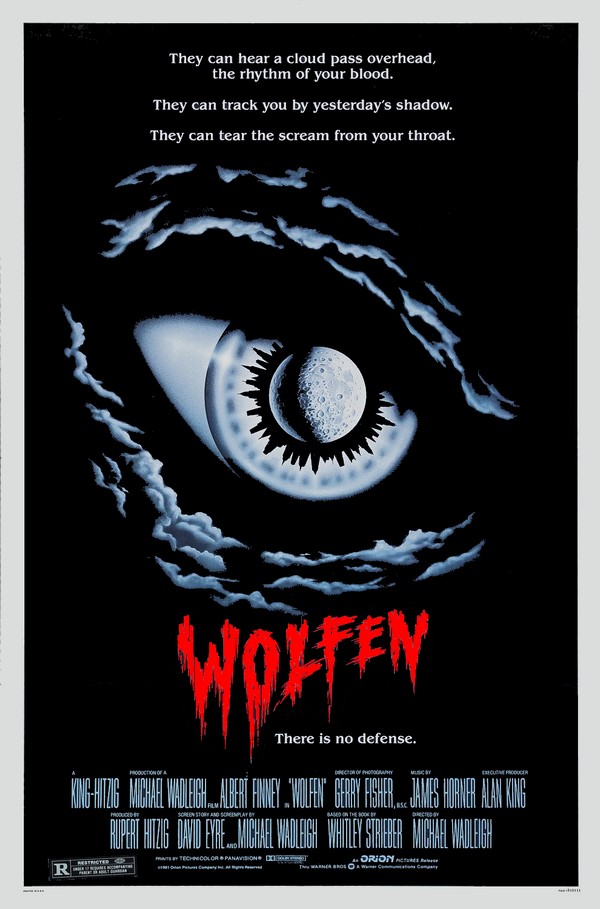
31 DAYS OF HORROR 2012-Day 20: WOLFEN (1981)


When WOLFEN first came out, I was sixteen years old and hungry for any and all horror films that I could encounter, with my appetite for scares of the lupine variety kicked into high gear by the excellence of THE HOWLING. You see, like most fans of the genre, I have a particular flavor of horror and preference of monster that pleases me more than any other, and that would be yarns about werewolves, so when WOLFEN came out I was more than ready for it. Or so I thought.

When a South Bronx urban renewal plan begins demolishing a dodgy neighborhood infested with junkies and other assorted lowlives, a series of brutal and bizarre murders commences, starting with the rich developer behind the development initiative. Also killed are his girlfriend and his huge, Haitian bodyguard, who was a gun-wielding former officer in Haiti's infamous Tonton Macoute paramilitary force (a group of guys you would NOT want to mess with). Investigating NYPD Detective Dewey Wilson (Albert Finney) is put under direct pressure from his boss, the commissioner, and the mayor to solve the case with expedience, thanks to the murders being (incorrectly) believed to be the work of a terrorist organization called "Gotterdammerung." Noting the deceased bodyguard's prominent ring proclaiming his voodoo affiliation and not buying into the convenient , Dewey's sleuthing takes a decidedly supernatural turn as the murders proliferate and yield inexplicable forensic evidence (or complete lack thereof) from the victims' remains. In no time, Dewey, his coroner buddy Whittington (Gregory Hines), assigned criminal psychologist partner Rebecca Neff (Diane Venora), and weirdo zoologist Ferguson (Tom Noonan) find themselves on the trail of creatures straight out of Native American mysticism — a connection pointed out by Ferguson — a pack of wolf-spirit predators who kill to preserve their hunting territories (and also to take advantage of any weak and easy prey that may wander within their range). The Wolfen have a number of bizarro powers that, among other things, allow them to remain undetected my the eyes of unbelieving mortal men (until it's too late), so even if Dewey could prove their existence and culpability for the killings, who in the modern age would believe his findings? 

Though quite intelligent, mature in approach, and delivered in a way that renders its fantastic elements believable, WOLFEN unfortunately comes as something of a disappointment when sandwiched between the same year's back-to-back lupine onslaught of THE HOWLING and AN AMERICAN WEREWOLF IN LONDON (all were released in 1981). It's less of a straight-up horror movie than it is a police/detective procedural with a rather dull first hour, but things liven up considerably once we start getting clued in as to exactly what the hell is going on in regard to the supernatural predators. The performances are all good and the story's mostly solid — I could have done without a pointlessly-included sexual encounter between Dewey and Rebecca that comes from out of nowhere and adds absolutely nothing to the plot — so I say it's worth a one-time look for lupine horror completists and those who want to see Edward James Olmos running around butt-nekkid as a militant Native American pretending to be a wolf. Also of note is James Horner's score, which features a few flourishes that would become indelible when revisited some five years later for the score accompanying ALIENS.

Poster from the original theatrical release.

Friday, October 19, 2012

31 DAYS OF HORROR 2012-Day 19: MARK OF THE DEVIL (1970/1972)


Remember a few entries ago when I talked about WITCHFINDER GENERAL, a classy movie about foul, manipulative torturers who roamed about ye olde Englishe countryside doling out cruelty, extortion, and rape while taking advantage of the fearful and ignorant and claiming to be doing God's work? Well, bunkies, now's the time to enlighten you on what can happen in the wake of an artful work dealing with highly unpleasant subject matter, namely the crass exploitation of the worthwhile piece's less-than-savory aspects. That's right, I'm talking about WITCHFINDER GENERAL's embarrassing bastard child, the odious MARK OF THE DEVIL.

Released in 1970, this West German shocker was originally entitled HEXEN BIS AUFS BLUT GEQUALT — which my fluent-German-speaking pal Mindless Kirby assures me translates as WITCHES ARE TORTURED TO DEATH — and its threadbare plot wastes the talents of both a young Udo Kier (a very versatile actor whom I've always liked and genuinely feel he's never received the recognition he deserves) and the ever-reliable Herbert Lom in what is essentially an uninvolving excuse for a good number of graphic sequences of innocent young women enduring sadistic torture after being falsely accused of witchcraft. That's really all there is to it and even though it's vile, disgusting, and incredibly sleazy in its presentation, its scabrous "thrills" eventually get old and in no time you'll find yourself looking to down another beer or throw in your ever-within-reach copy of 18 AND NASTY VOL. 10 (which I recommend infinitely more than MARK OF THE DEVIL) and heartily begin shuffling off some knuckle-children. I don't mean to skimp on outlining the details, but there really is no point in doing so with this one, and I only mention it because it's the middle stage in the evolution of its niche in the genre, which paved the way for the ultimate and very classy witch-related torture film that succeed it. But more on that later...

My main reason for bringing up MARK OF THE DEVIL was due to the lasting impact it had on me when I was about three months away from turning seven years old, just before my family left California and moved to the opposite side of the United States. It was the spring of 1972 and this wee Bunche was accompanying his mother and aunt to a local shopping mall. Once the station wagon had been parked in the outdoor parking lot, we went inside and spent however long shopping and enjoying lunch in the food court, and when we went outside we were greeted with the astonishing sight of nearly every car in the lot having a folded and (thankfully) unused MARK OF THE DEVIL vomit bag tucked snug under one of the vehicle's windshield wipers. 

An example of one of the bags that so sparked my under-seven-year-old admiration.

My mom and aunt were both perplexed but soon sussed out that the bags were basically the kind one received on airplane flights so one could hurl during turbulence, only here they were re-purposed to catch geysers of spew brought on by the myriad horrors that MARK OF THE DEVIL so merrily splashed across the screen like so many buckets of offal during the film's American release's novel publicity blitz. My elders were highly amused by this and when they explained it all to me, I was absolutely delighted at the concept of a film so gross that it actually made people vomit. Unfortunately, my mom removed the MARK OF THE DEVIL vomit bag from beneath the windshield of her station wagon and promptly threw it away, which is a great pity because now those fucking things are collector's items and I would love to have one. (They can be had for cheap and one day I'll get one — or more — but to have the very one from that magical, formative moment in my childhood would be sheer bliss.)

Poster from the original West German release.

Thursday, October 18, 2012

31 DAYS OF HORROR 2012-Day 18: THRILLER "THE WEIRD TAILOR" (1961)


The 1960-1962 Boris Karloff-hosted NBC anthology television series THRILLER is today largely forgotten by genre fans, presumably thanks to THE TWILIGHT ZONE's five-season episode count and rerun ubiquity, and that's a damned shame because lovers of straight-up horror are missing out on some real gems. Thankfully, the series has been rescued from obscurity on DVD and the curious can now savor it with relative ease. That said, this particular installment is a fun exercise in mounting eeriness that ranks among my favorite hours of televised fright fare and it's written by Robert Bloch, the author of PSYCHO and many, many other shockers of note, so put that in your hookah and smoke it.

Mr. Smith (George Macready),  a wealthy Manhattanite dabbling in the blackest of black magic, seeks to restore the life of his son, a souse who failed to heed his father's warning to not walk through the smoking pentagram that dad has drawn on the floor of his study (drawn there apparently in an attempt to summon and control demons).


Virtually the template for Mercyful Fate's classic metal tune "A Dangerous Meeting."

Desperate for a way to bring his idiot kid back, the amateur hour Crowley seeks advice from a blind seeress/white witch (Iphigenie Castiglioni) but she strongly cautions him against proceeding any further with his unholy scheme. When he will not be persuaded to do otherwise, the seeress reluctantly gives Smith the name of a black magician who may be of assistance, and her lead yields results when the magician — whose day job is that of a used car salesman — sells Smith a rare book of spells for a cool million bucks (which was a hell of a lot of money back in 1961). The book is one of three copies known to still exist and is of such a diabolical nature that all of the previous copies were burned hundreds of years ago...along with their owners. Reduced to being a veritable pauper but assured that the spell he requires is to be found in the antique tome, Smith discovers that the spell in question involves the expert crafting of a suit of clothes, dictated by a very specific set of rules — strict hours in which it must be sewn, no buttons, et cetera — so all he must now do is find a suitable tailor for the task.

That quest brings the immigrant Borgs into the picture, a miserable and mismatched pair if ever there were one. Apparently hailing from "the old country" (which would seem to be Germany), the husband,  Erich (Henry Jones), operates a humble tailor shop somewhere in NYC while physically and emotionally abusing his much-younger wife, Anna (Sondra Kerr). Terminally late on paying his rent and with no business coming in, Erich cruelly vents his frustrations on Anna, leaving the pitiful, abused woman to cry and tell her woes to her only friend in the world, a cracked plaster tailor's dummy named Hans (an uncredited Diki Lerner). 

Anna unloads the litany of her unhappiness to the inanimate Hans, her only friend in the world.

From her one-sided conversations with the dummy, it's made plain that Anna's torment has gone on for a long time and that she is trapped in a lonely hell on earth, wishing that Hans were a real man who would simply be kind to her. When Smith arrives with a bolt of very "unusual" cloth and his odd directions for the manufacture of the occult suit, Erich jumps at the chance to make a quick $500 for his services (again, this is 1961 money that were talking), and from there is woven a tapestry of greed, threatened spousal abandonment, murder (both successful and attempted), and something that can only be called a dark miracle...

If you've ever seen a horror movie, read a horror novel, or even absorbed the contents of a scary comic book, you can guess from the get-go where this one is going, but it's the buildup that makes it a flesh-crawling gem. I first saw "The Weird Tailor" during a Thanksgiving or Christmas visit (I honestly forget which) to my mother's house some years ago, encountering it while flipping channels late at night, and it hooked me from the opening sequence of the drunken son discovering his father's Satanic shenanigans. The level of detail/art direction put into the study-cum-conjuring chamber and its unholy decoration was enough to convince me that here was an old school horror series that took itself — and its audience — very seriously indeed, so I stuck with it and as a result it stuck with me to this day. The last two minutes of this story, while providing something of a happy ending, are disturbing as hell and would have come off as silly or laughable on just about any other show, but here it results in a very queasy head-on collision of wish fulfillment and sheer, mind-warping fear. It's one of those stories where you all but scream "Jesus fucking Christ, what the hell happens now?!!?" but it simply ends and provides no further denouement, leaving the audience gobsmacked and profoundly creeped-out. (slow, reverent golf clap)

Wednesday, October 17, 2012

31 DAYS OF HORROR 2012: Day 17-HUSH...HUSH, SWEET CHARLOTTE (1964)


There are few places on this earth more psychologically fucked-up than the American south, a fact mined for storytelling fodder to great effect by such authors as Kyle Onstott, Tennessee Williams and the odious Lance Horner (whose GOLDEN STUD is one of the truly great plantation-set sleaze novels). After the critical and box office success of the ultra-fucked-up "hag horror" prototype WHAT EVER HAPPENED TO BABY JANE (1962), director Robert Aldrich wisely looked below the Mason-Dixon Line for the setting for his followup "creepy old broad" movie, 1964's HUSH...HUSH, SWEET CHARLOTTE, and that creative decision payed off in spades, allowing for a parade of southern Gothic intrigue, family dysfunction, psychological cruelty and outright madness.

In 1927 Louisiana, during a lavish party at the Collins House mansion, Collins family patriarch Big Sam (Victor Buono) dissuades married man John Mayhew (Bruce Dern) from eloping with his daughter, Charlotte. As John breaks off his affair with Charlotte, telling her he "made a mistake," Charlotte runs away in tears, leaving John alone in the mansion's summerhouse. As John sits with eyes closed, pondering how things have fallen apart, a female figure runs into the room and graphically (for 1964, anyway) hacks off John's hand with a cleaver, then rains repeated cleaver blows down upon him, eventually beheading him (not seen on camera). Shortly thereafter, a dazed Charlotte walks into the party, the front of her party finery drenched in blood. As the body is discovered and all the attending guests stare in disbelief, Big Sam escorts his daughter away from the party.

The narrative then shifts to the present day of 1964, and we learn that Charlotte was sent away to England to allow the murder scandal to die down. Though never convicted of John's murder, Charlotte (now played to the hilt by Bette Davis) has become the town's local "crazy, witchy old lady" and lives, seriously unbalanced and just a bit dangerous when she's got a rifle in her hand, in her father's mansion, well-off but alone, save for her white trash servant, Velma (the inimitable Agnes Moorehead). After repeatedly refusing to heed the orders of the Louisiana Highway Commission to vacate her home so a new highway's construction can proceed, Charlotte calls her sole surviving kin, Miriam (Olivia DeHavilland), for aid in preventing the demolition of Hollis House. Once a poor girl who lived with the Hollises, Miriam arrives and assists Charlotte's doctor, Drew Bayliss (Joseph Cotten), in the care of her unstable cousin. As Drew and Miriam rekindle a relationship that ended when Drew dumped her after John's murder, Velma fears that Charlotte's cousin is after her money, so she arranges for a Lloyd's of London insurance investigator (Cecil Kellaway), to look into matters. As all of this goes on, Charlotte's sanity takes a steady nosedive as she begins seeing and hearing evidence of her dead lover's presence, and it's only a matter of time before the men in the white coats come to take her away for good...

HUSH...HUSH, SWEET CHARLOTTE is very engaging and deserving of its considerable fan base, but for my money it could have done with a nip and tuck here and there. It's definitely overlong at two hours and thirteen minutes, and while its leisurely pace is like a mint Julep-induced hothouse dream that allows us to fully get to know the characters, it occasionally feels like it's taking forever to get from one scene to another. It does, however have some nifty scares, most notably the sight of John's mutilated corpse walking into Charlotte's study and baring a hideous and haphazard neck wound — is it real, or is Charlotte completely barking mad? — and both Davis and Moorehead are a lot of fun to watch at work here, especially the way-over-the-top Moorehead. The film's tag line should have been something along the lines of "Trust No One," and by the end of the movie you'll discover just how tragic Charlotte's thirty-seven-year nightmare of guilt, loneliness, dodgy sanity and status as a social pariah really is...

The bottom line on this one is that it comes in at number three in the hag horror pantheon, a ranking determined solely by its over-length. If it had the benefit of a tighter edit, it would have a firm hold on STRAIT-JACKET's rank in the number two slot, but even then it would still fall short of the superb WHAT EVER HAPPENED TO BABY JANE? Now if only this had been written by Tennessee Williams...

Poster from the original theatrical release.