Search This Blog

Friday, October 12, 2018

31 DAYS OF HORROR 2018-Day 12: GOING TO PIECES: The Rise and Fall of the Slasher Film (2006)

Those of us who came of age in the 1980's can tell you all about the era's generation-defining explosion of slasher films, but there's a lot of ground to cover and it's sometimes difficult to get across  to today's younger horror fans just how impactful the craze was on American culture and world cinema. This documentary takes a very good stab (pun intended) at providing a comprehensive history and overview of the fascination with graphic violence as an entertainment form, going back as far as France's live Le Théâtre du Grand-Guignol stage productions staring at the end of the 19th century, and rightfully citing PEEPING TOM and PSYCHO, both released in 1960, as the progenitors of the cinematic slasher genre. It then skips ahead to the impact of HALLOWEEN in 1978, which inspired the making of the surprise hit that was FRIDAY THE 13th (1980), the film whose success was what truly opened the bloody floodgates of the slasher genre as we came to know it.

Featuring commentary and observances by filmmakers and cast members of the iconic films from the genre, the documentary does as much as it can to examine slasher movies both as populist entertainment and suss out exactly why they were so big during their heyday. It traces the deluge that began with FRIDAY THE 13th, calls bullshit on the parental watchdog controversy over SILENT NIGHT, DEADLY NIGHT (1984), marks the end of the first wave with the release of FRIDAY THE 13th: THE FINAL CHAPTER (1984) and the start of the second wave with A NIGHTMARE ON ELM STREET (1985), notes the decline and dormancy leading into the 1990's and the rekindling of the general public's interest in horror with the mainstream acclaim and success of THE SILENCE OF THE LAMBS (1991) before the rebirth of the genre proper with the knowing and comedic meta-commentary of SCREAM (1996). So, what we have here is an attempt to dissect a genre that contains  seemingly hundreds of films spanning a nearly three-decade period, and for the most part it does the job quite nicely, but due to the sheer volume of content, it at times reads as a Crib Notes version of what could easily fill out a whole semester in a college film studies course. Even so, it's a fun trip down Memory lane for those of us who were there, and it's definitely recommended as a good starting point/primer for curious newcomers. 

Thursday, October 11, 2018

31 DAYS OF HORROR 2018-Day 11: HERCULES IN THE HAUNTED WORLD (1961)

The sybil speaks.

Princess Deianira (Leonora Ruffo), the lover of the mighty Hercules (Reg Park), is inexplicably driven mad and her people are consequently miserable. The only thing that can restore her sanity is a stone found in Hades, Greek mythology's land of the dead, so Herc and his pals, priapic ladies' man Theseus (George Ardisson) and woefully unfunny comic relief Telemachus (Franco Giacobini) set off on a quest to snag the magic rock and save the princess. But what our heroes don't realize is that Deianira's madness has been orchestrated by her guardian, the evil Lico (Christopher Lee), who has used her insanity as an excuse to install himself as king of her land. 

Christopher Lee as Lico. Not Dracula this time, but still evil as fuck.

Lico is in league with unspecified dark gods (presumably not of the Greek pantheon) and wields assorted baleful powers, so our heroes must first endure a number of potentially deadly trials in their quest for the stone before returning home to settle Lico's hash. And as if all of that wasn't enough to deal with, things are further complicated when the walking erection that is Thesues meets and instantly falls in love with a nameless beauty (Ida Galli) in the underworld and sneaks her out to make her his bride. Unfortunately for him, she turns out to be Persephone (look up her story in literally any book on Greek mythology), so Pluto, the unseen lord of the dead, is none too pleased by her departure, thus bringing the displeasure of one of the most powerful gods down upon Deianira's land in the form of crop and livestock blight and natural disasters. And as a coming eclipse looms, Lico must drink the blood of Deianira to ensure that he rules her kingdom for eternity. In other words, just another week at the office for Hercules.

HERCULES IN THE HAUNTED WORLD (originally titled HERCULES AT THE CENTER OF THE EARTH in its native Italy) is one of the best-looking and most visually imaginative of the hundreds of tits & togas flicks released during the 1960's, and it overflows with mood and atmosphere. Writer/director/co-cinematographer/special effects artist Mario Bava was a legendary and prolific filmmaker who more or less codified the tropes of the peplum genre as we know it with the back-to-back international box office hits HERCULES (1957) and HERCULES UNCHAINED (1958) starring Steve Reeves, and those films spawned a slew of imitators that glutted the screen for the next decade. (I'd love to know exactly how many Italian peplum movies were released in the wake of the Reeves flicks, but good luck counting all of them. There have to be literally hundreds.) Bava's work on HERCULES IN THE HAUNTED WORLD was pretty much the last word when it came to genuine quality creative filmmaking for this sort of film during its heyday, and his other notable contributions to cinema form an impressive roster that includes genre-redefining classics such as THE MASK OF SATAN (1960), BLACK SABBATH (1963), BLOOD AND BLACK LACE (1964), PLANET OF THE VAMPIRES (1965), and DANGER: DIABOLIK (1968)

As for the movie itself, the true virtues of HERCULES IN THE HAUNTED WORLD lie in its visual presentation. It's low on actual scares, but its depiction of the underworld is memorable and lit with colors that border on psychedelic. Reg Park, possibly the most physically jacked of the actors to essay the role of Hercules until Arnold Schwarzenegger and Lou Ferrigno, is himself a living special effect, looking like an animated slab of well-muscled beef, and therefore making a perfect Hercules.

Reg Park, kicking ass and hefting styrofoam boulders as Hercules.

The Hercules films of the peplum boom did not exactly require an Olivier or a Brando to portray the legendary hero, so Park's thespic chops were irrelevant when compared to his ability to look good in a one-strapped leather toga. And who cares if the guy can act when all that's really required is for him to take on the likes of rock monster Procrustes, 

Procrustes, looking like a guest monster on LOST IN SPACE.

vines containing the souls of the dead that scream and bleed when cut, and a pack of web-encrusted flying zombies that crawl up from the tomb? And let me tell you that it's not every day when you get to see Hercules squash Christopher Lee to death with a huge styrofoam monolith, so what's not to love?

Just one of the sights found in the underworld.

HERCULES IN THE HAUNTED WORLD is a fun way to spend a rainy Sunday afternoon and is a must for all fans of Greek mythology-based movies, even though it plays fast and loose with the actual stories (which have been reinterpreted numerous times and with numerous variations for centuries, so why quibble?). Too bad Bava didn't rope Ray Harryhausen into the mix to provide some of his signature stop-motion animated monsters to add some more spice...

Poster from the American theatrical release.

Wednesday, October 10, 2018

31 DAYS OF HORROR 2018-Day 10: CARRY ON SCREAMING (1966)

Monsters on the loose!

Edwardian England: As young lovers Doris (Angela Douglas) and Albert (Jim Dale) attempt to get romantic in fog-shrouded Holcombe Woods, Doris ends up as the sixth victim to be abducted by a mysterious, hulking monster (Tom Clegg). Albert reports the disappearance to Detective Constable Slobotham (Peter Butterworth), who enlists Detective Sergeant Sidney Bung (Harry H. Corbett) to investigate. The clues lead the trio down a trail of escalating played-straight lunacy of the type that one could see coming from the mid of Charles Addams if he'd been born and raised in England. They encounter a creepy house run by the stunning Valeria (Fenella Fielding, in full-on Morticia Addams mode, only dressed in red as opposed to black), Lurch-like butler Sockett (Bernard Bresslaw), and Valeria's brother, dead and electrically-charged mad scientist Dr. Orlando Watt (played to perfection by the one and only Kenneth Williams), and all of the madness and mayhem that one would expect from a comedy poking fun at then-in-vogue horror tropes to send up. Lurking monsters, cleavage-baring dresses, laboratories filled with sparking electrical equipment, kidnapped girls subjected to medical experiments, colorful locals played by scenery-chewing studio regulars, an evil seductress, Jekyll/Hyde-style transformations, you name it. And when all is revealed, the master plan of the sinister siblings turns out to involve turning the abducted girls into wax figures that are crated and sold. (Considerably less lofty than reanimation of the dead or summoning demonic entities from Hell, like one would see in a garden variety Hammer film, but it's a living.)

The twelfth in the long-running CARRY ON series, CARRY ON SCREAMING is less a parody of specific Hammer horror films and more a lampoon of their singular flavor and aesthetic in the days before the studio was allowed more freedom when it came to explicit blood, gore, and female nudity. The CARRY ON franchise is a prime example of pre-Python British humor, loaded as it was with endless "sauce," meaning pretty and stacked actresses acting silly in as little clothing as the censors would allow, double-entendres, and all manner of sex-related farce as seen through what outsiders would consider to be a stodgy and somewhat stereotypical British sensibility. That said, I kind of wish this film were made a bit later during Hammer's heyday, so it could have had even more or an excuse to cram in as much over-the-top humorous nudity and gore as possible, but I'm happy with what we ended up getting. It's definitely one of the best CARRY ON films, right up there with their Cleopatra spoof, CARRY ON CLEO (1964).

Valeria (Fenella Fielding) and her brother, Dr. Orlando Watt (Kenneth Williams).  I would have happily watched an entire series based on the antics of these two.

CARRY ON mainstay Kenneth Williams has long been one of my favorite U.K. comedic performers, and he's in fine camp form here as Dr. Watt. His signature queeniness is a delight, as always, and the glee with which he knowingly delivers the terrible puns that pass as his lines is downright infectious. And do not get me started on the awesomeness that was Fenella Fielding's turn as Valeria. Though nebulously-defined, her character is definitely some kind of supernatural whatsit along the line of Morticia Addams, right down to the ability to make her body spontaneously exude smoke.

Valeria, a literally smoking temptress.

She's sexy as hell and possessed of a sultry voice, plus to say nothing of how she fills out her blood-red dress, so why is Valeria not on the short list of foxy monster chicks like the Bride, Vampira, Morticia, Lily, and Elvira?

CARRY ON SCREAMING has nothing on its mind but to be a bit of naughty, silly fun that takes the piss out of Hammer horror, at which it succeeds quite nicely, though from today's P.O.V. it's rather tame. Still, it hits all the right notes and nails the Hammer flavor, so I recommend it to fellow Hammer-junkies. Plus, it features good old Jon Pertwee as a police scientist, just a few years before he became a British superstar and cultural institution as the third incarnation of the Doctor on DOCTOR WHO.

A comedic role for Jon Pertwee, a few years shy of ruling the airwaves on DOCTOR WHO.

Poster for the original British theatrical release.

Tuesday, October 9, 2018

31 DAYS OF HORROR 2018-Day 9: THE FLY (1986)

The erosion of one's humanity is NOT a pretty thing.

"I'm saying... I'm saying I... I'm an insect who dreamt he was a man and loved it. But now the dream is over... and the insect is awake." -Seth Brundle

Brilliant, quirky scientist Seth Brundle (Jeff Goldblum) invents mankind's first teleportation system, which he clues scientific journalist Veronica Quaife (Geena Davis) in on, but he has yet to sort out how to successfully teleport living tissue without lethal results. Seth and Veronica enter a sexual relationship and, inspired by their lovemaking, Seth figures that he has to make the teleportation program "crazy for the flesh." Exactly how he achieves that is conveniently glossed over, but succeed he does, utilizing a live baboon as a test subject. Acting hastily, Seth opts to use himself as human subject and successfully transports himself. At first, all seems well, but he soon develops greater levels of physical strength, agility, and stamina, as well as becoming more violent and aggressive while parts of his body sprout thick hairs. Veronica dumps him once his personality begins to change for the worse, but before she leaves him she snips off some of the hairs, has them analyzed, and discovers an unexpected, horrifying complication to Seth's self-transmission: Unbeknownst to Seth, a common housefly had made its way into the telepod with him and, unsure of how to proceed when faced with information on two different DNA readings, the program solved the issue by merging the human and housefly DNA on a molecular level. In other words, Seth is now mutating into a hybrid creature that he self-mocking dubs "Brundlefly." As the transformation progresses, Seth's humanity erodes on a daily basis, and his body becomes a truly disgusting mass of oozing sores and pus, eventually shedding its superfluous components as the new creature comes to the fore. And then Veronica finds out that she's pregnant by Seth, and the baby may have been conceived after he went through the telepod...

I grew up as a massive fan of the original, waaaaaaay more genteel 1958 version of THE FLY, considering it to be one of the sci-fi/horror blends that most deeply affected me as a child due to its ponderings on possible dire consequences of man tampering with the infinite and that shattering (and,  in retrospect, totally ridiculous) ending, so I approached the 1986 remake by David Cronenberg with no small amount of trepidation. I greatly enjoy much of Cronenberg's filmography, with him having carved a place for himself in movie history as the Hitchcock of "body horror," but my childhood attachment to the 1958 was too strong for me to have the blind faith in him that I should have. There was perhaps no other living director at the time who was better-suited to the task of updating the admittedly hokey material for the 1980's and really, really taking the audience there with a script that was absolutely adult and bolstered by some of the best and most nausea-inducing practical effects this side of John Carpenter's take on THE THING (courtesy of Chris Walas). Seth Brundle's loss of humanity and descent into Brundlefly are simultaneously terrifying and completely tragic, as we come to know and rather like Seth as something of a "cool nerd" type, and his romance with Veronica is something the audience genuinely cares about. Seth Brundle is one of Jeff Goldblum's defining performances, and Cronenberg perfectly exploits his singular thespic flavor while keeping his sometimes-goofy "Goldblumness" in well-considered check for the sake of the story he's telling. This is Goldblum at his most believably quirky while not veering into cartoonish sitcom scientist territory, and it's a stunning performance.

Just as good as Goldblum is Geena Davis, whom I have long maintained was nearly always a better actor than the material she was often given deserved. Tall, unfairly lovely, with those huge doe eyes and arresting smile, she also always communicated a fierce intelligence that marked her characters as different from and more interesting than her actress contemporaries in the '80's. If I knew she was in a movie, regardless of genre, my ticket money was guaranteed, and it galls me that she never received the credit that she is due for damned near every part she played. Veronica Quaife is an interesting take on the Lois Lane-style go-get-'em female journalist, and the audience falls in love with her right along with Seth. Veronica's clearly in her element when dealing with fellow sharp-minded people, and her being shown by the script to be smart was a welcome change of pace from the usual parade of '80's eye-candy in horror movies. And I would like to note that Davis utterly sells what is, to me, one of the most revolting sequences in film history, namely when she lucidly imagines going into a hospital to have Brundlefly's baby aborted, only to — much to the understandable complete and utter horror of herself and the surgical team — give live birth to a slimy, bloody, writhing, two-foot maggot.

 When birth is the polar opposite of a miracle.

In a film full of nasty, blow-your-lunch visuals, that sequence gets my vote as the true showstopper, when one pauses to consider its implications were it to occur in real life. It's just plain horrible, and even though I do not possess female reproductive equipment, I swear to whatever gods there may be that when I saw this film on opening night, just a couple of months after I turned 21, I could feel that mucous-slathered larva wriggling its way out my own nether regions.

In short, Cronenberg's THE FLY is not only at the top of the heap when it comes to the best cinematic remakes, it's also on my personal short list of the best horror films ever made and one of my favorite movies of any kind whatsoever. An instant classic, this one get my HIGHEST RECOMMENDATION.

Poster from the original theatrical release.

Monday, October 8, 2018

31 DAYS OF HORROR 2018-Day 8: GOLIATH AND THE VAMPIRES (1961)

Now, this is how you kick off a movie!

A band of marauders raid and destroy a seaside village, killing all the men and abducting all the women. The guys are such bastards that once at sea and making their way back to their home island, they throw all of the old women overboard as food for sharks, but they also take random samples of the captive girls' blood to feed to their unseen master. Unfortunately for the marauders, the village they destroyed was home to Goliath (former Tarzan and beefcake legend Gordon Scott) and one of the nubile abductees is Goliath's betrothed, so it's off to the raiders' homeland for some righteous peplum-style ass-kicking. The marauders' homeland, Salmanak, is ostensibly run by a sultan, but he and his people are under the vile thrall of spectral vampire lord Kobrak, who is aided by the sultan's chief consort, Astra (Gianna Maria Canale). To rescue his beloved and the captive girls (who have been sold into slavery in Salmanak's slave market), Goliath must take on hordes of soldiers,  a hidden race of blue men, assorted cheapjack monsters,  a legion of the walking dead, and eventually Kobrak himself. Kobrak's master plan is to conquer the world by transplanting his mind into a duplicate of  Goliath's super-powered body and leading an army of mind-controlled super-slaves, but if you think Goliath's down with that mess, then you have never seen an old school "tits 'n' togas" actioner.

Astra (Gianna Maria Canale) confers with vampire lord Kobrak.

Originally one of the many Italian muscleman flicks of the 1960's to feature the all-purpose superhero Maciste, this entry was part of the peplum boom kicked off by the Steve Reeves Hercules films of the late-1950's, which proved to be unexpected international hits at the box office. The success of the Reeves Hercules flicks opened the door for a flood of cash-ins and knockoffs that would go on to glut the screen for close to a decade, with only a handful of the hundreds of films in the genre actually being any good. GOLIATH AND THE VAMPIRES, as it was retitled for its American release, is one of that handful, and it's a fun introduction to the genre for newcomers. While low on scares and totally suitable for younger viewers, it has enough sword & sorcery madness and cheesy monsters to make it worthwhile as an example of the genre's occasional fusion of mythic hero and horror tropes. 

Kobrak manifests in tangible form.

But while GOLIATH AND THE VAMPIRES is a decent representative of this section of the peplum genre, it's not the best of the classic-era peplum/horror hybrids, but we'll be getting to that soon...

Poster for the Italian theatrical release.

Poster for the American theatrical release.

Sunday, October 7, 2018

31 DAYS OF HORROR 2018-Day 7: THE THING (1982)

A close encounter of the worst kind.

Full disclosure: When John Carpenter's remake of THE THING came out, I didn't like anything about it other than the now-legendary practical special effects. You see, I approached it with a prejudicial hatred based on how much I loved the Howard Hawks version from 1951 and to my still-in-high-school perceptions, the remake was both blasphemous and dull. Then, sometime a few years later, I saw Carpenter's remake again, and that time I finally got it. Admittedly, my young mind had been dulled by the steady avalanche of the 1980's slasher boom, so I was perhaps not in the proper head space for anything more challenging at the time, but whatever the case, Carpenter's THE THING has since gone on to become one of my favorite horror films for a number of very good reasons.

In a nutshell, the story revolves around the terrible fate of a group of researchers at an Antarctic base who stumble across a hostile extraterrestrial life form that can absorb other living creatures and flawlessly duplicate them, and if a piece is cut off of the alien, that individual piece will now function as a separate entity possessing the same shapeshifting capabilities, so the only way to put a stop to it is to immolate it until nothing remains but charred ashes. The creature of course manages to imitate and replace assorted members of the team, and the group swiftly falls victim to frayed nerves and understandable paranoia as no one among them can be trusted. And once the creature's nature and capabilities are understood, it's clear that it cannot be allowed to escape from the remote Antarctic base, lest is reach civilization and begin its imitation/assimilation tricks on a scale that will spell the end of mankind. The Thing is also highly intelligent, having crash-landed on Earth untold ages ago in a flying saucer, and now that it's once more awake and active, it seeks to repair its spaceship and leave...

Examining one of the Thing's twisted hybrid forms.

Describing more would give away a lot of the slowly-winding knot of tension that carpenter crafts from the film's opening frame, so all I'll say is that Kurt Russell leads a fine ensemble of actors who all come off as completely believable in the fantastical situation they are faced with, and the creature effects by Rob Bottin are simply jaw-dropping in their execution and horrifying liveliness. The film's considerable cult rep is mostly due to the creature effects, and you'll thank me for only showing you the one photos that I chose. Seeing the Thing alive, writhing, and very, very pissed off is a joy that every lover of movie monsters and alien wigglies should experience for themselves, so THE THING gets my highest recommendation. And after seeing this film, I promise that you will never quite look at your beloved dog the same way again...
Poster from the American theatrical release.

Saturday, October 6, 2018

31 DAYS OF HORROR 2018-Day 6: "MANOS" THE HANDS OF FATE (1966)

A road trip takes a nasty turn when a family makes its way down a lonesome Texas highway and encounters a creepy house (that's not supposed to exist) populated by what's apparently some sort of polygamous satanic cult led by an undead sorcerer. Sounds simple, right? Oh, it's simple, but the finished film is a cinematic train wreck of epic proportions.

Made on a $19,000 budget by Harold P. Warren, an insurance and fertilizer salesman operating out of El Paso, Texas, the film came about as the result of Warren accepting a bet to make a horror movie. What resulted is unarguably one of the most incompetent works of cinema in history, and those who incorrectly cite PLAN 9 FROM OUTER SPACE (1959) as the alleged "worst film ever made" would do well to see it for themselves so they can truly understand just how bad a movie can be in literally every possible way. I shit you not, there is literally nothing in the entire running time of MANOS: THE HANDS OF FATE that could be considered worthwhile, and that is precisely what makes it an object of fascination for me and its legion of gobsmacked fans.

The film  stars absolutely no one of note and every performance is about on par with what one could expect from a live junior high school theater production if the cast had recently discovered the joys of Percodan and red wine cocktails. Harold P. Warren heads the players as Michael, the father in the hapless family of vacationers, and to call his thespic chops "wooden" would be to insult all trees everywhere. Diane Mahree as Margaret and young Jackie Neyman fill out the mother and daughter roles, but they are simply there to be present and put in the way of the script's meager threats, and they consequently barely register as anything other than manikins. 

A gathering of thespic titans.

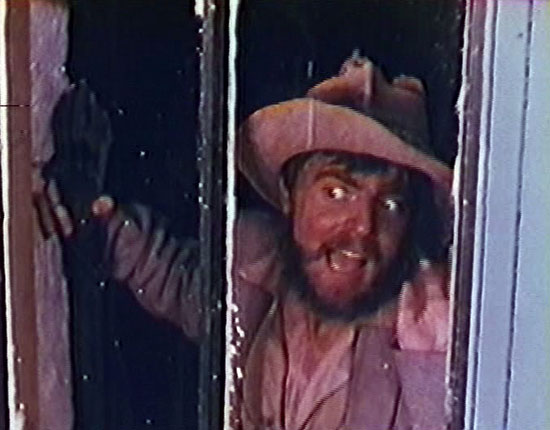
Anyway, upon arriving at the remote house that isn't supposed to be there, the family encounters Torgo (John Reynolds), the place's creepy concierge (or something) who speaks haltingly and staggers around on what appear to be satyr-like goat legs. (At least I think that's what they're supposed to be; the actual effect makes it look as though the actor has stuffed full rolls of paper towels down his pants to serve as exaggerated thigh muscles.) 

The immortal John Reynolds as Torgo, a performance for the ages.

To put it as kindly as possible, Torgo is one creepy motherfucker, and he informs the family that they are not welcome because "the Master is away," but he almost immediately changes his tune and states "the Master likes you." Understandably weirded out by all of this, the family opts to settle in for the night, but first they simply stand around doing nothing in the lodge's living room while admiring a portrait of the aforementioned Master. Oh, and the Master is also apparently dead, but not, so go figure. (It's never explained.)

Portrait of the Master (and friend).

As the night progresses, Torgo majorly pervs on the wife in a sequence that induces the douche-chills in all who witness it

and before things can get actually rapey, the Master (Tom Neyman) arrives from wherever the hell he was and decides he wants to add the wife and daughter to his harem of apparently undead wives and servants of the undefined-but-demonic entity, Manos.

The Master (Tom Neyman).

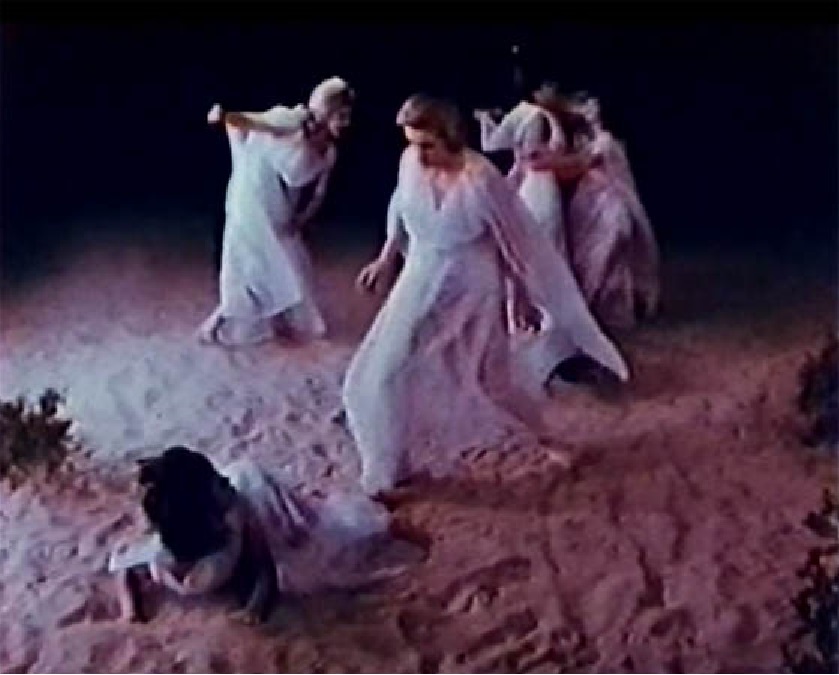
As the movie lurches toward its climax, the family dog is killed by something in the nearby desert, the Master's wives argue amongst themselves and engage in a catfight over whether or not to accept the wife and daughter into their ranks,

Hawt polygamous cultist action!

and Torgo gets called out for the pervy shenanigans he perpetrated upon the wives while they lay dormant, so the Master rips off and burns one of Torgo's hands before either banishing him or killing him. (It's not really made clear.)

The judgment of Torgo.

When all is said and done, the wife and daughter become brides of the Master (and, by association, Manos), Torgo is gone, and the hapless dad replaces Torgo as the lodge's concierge when two unsuspecting young women drive up to the place. THE END?

What you've just read is MANOS in a nutshell, and my review in no way begins to communicate just what a jaw-dropping complete and utter failure of a film it is. I left out describing the filler material involving a pair of highway cops who repeatedly harass a pair of teenagers who are perpetually caught necking in a sports car, and also did not go into how there are long stretches in which the cast just stands around looking confused while the soundtrack's madness-inducing music punctuates the absolute nothing that goes on. And speaking of the soundtrack, the film's audio was apparently lost or not recorded at all during filming, so the entire dialogue track is overdubbed, thus lending the movie the feel of a poorly-dubbed foreign effort. It seems like time has either come to a standstill or is running backwards as the audience attempts to process what it is witnessing, and at the end one feels like they've just survived a three-day bender in a basement somewhere in Tijuana, fueled by homemade tequila, a few cases of expired Tecate, and several bottles of industrial-strength Mexican cough syrup.  No lie, it is awful, awful, AW-FUL, but once seen it can never be forgotten. 

And it must be pointed out that John Reynolds' performance as Torgo has to be seen to be believed. He's weird beyond words and his bizarre, halting delivery is reportedly due to the actor being seriously dosed out of his mind on LSD during shooting, and I, for one, absolutely believe it. Tragically, Reynold's committed suicide at age 25 via a shotgun blast to the head a month before the film's release.  If he had not taken his own life and had lived to see how the movie became a cult favorite upon being re-discovered after its now-legendary airing on MYSTERY SCIENCE THEATER 3000 in 1993, he'd have been hailed as bad movie royalty and would have made a fortune on the convention autograph circuit. Anyway, MANOS is a must-see piece of cinematic detritus that only the most hardcore of bad movie enthusiasts tend to make it all the way through. Are you one of that hardy breed? Attempt the film for yourself and find out...

Poster for the American theatrical release.